Download Games

Recent Posts

Showing posts with label Eve Arden. Show all posts
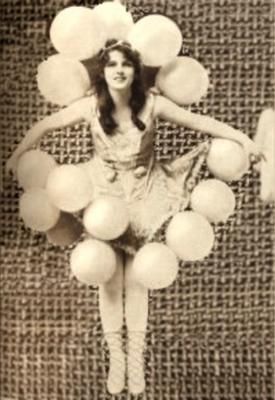
Paulette Goddard in a very elaborate get-up when she was
part of the Follies.


Hollywood and Beauty are nearly synonymous terms; Hollywood and sex are perhaps even more interchangeable. Aside from invigorating storylines and their emotional relevance, the movies have always offered us perhaps even more profoundly another source of satiation for our very ravenous eyes. Hitchcock wasn't barking up the wrong tree when he made Rear Window, starting a discussion on the obsessive and at times creepy voyeuristic tendencies of mankind. Watching gorgeous bodies in motion, observing creative and aesthetically appealing mise en scene compositions and camera angles, has made us all rabid devotees of theaters, televisions, and now iPads. But we didn't always have the movies. Before that, there was theater, vaudeville, travelling acting troupes... But nothing would produce the glorious collaboration of beauty and sex appeal, nor unleash it upon a grateful public on such a grand scale, as the brainchild of Florenz Ziegfeld: The Ziegfeld Follies. Using the knowledge that men enjoy few things more than looking at beautiful things, and enlisting the aid of a myriad of women who enjoyed the power of being the objects of male desire and adoration, Ziegfeld started the Paris-inspired Follies in New York in 1907, renaming it the Ziegfeld Follies in 1911. By 1913, The New Amsterdam Theater had become its home, with 1800 seats and shows going all the way up to the rooftop, where The Danse de Follies took place. While some regarded these extravaganzas as rude, offensive, and exploitative, you couldn't argue with box-office revenue. The public had spoken; they liked what they saw.


Chorus girls light up the stage.


The shows weren't as simple as strip-teases: there was elegance, detailed costuming, fantastical imagery, and romanticized story-telling. Sure, every once in awhile girls showed up buck naked, but in these cases, they were always forced to remain stationary so that the show did not become graphic or "lewd." It was only the glamorously bedecked females that were able to move and shake. And these women weren't frowned upon; they were adored. Wealthy businessmen, most of them older, near to retirement and enjoying their years of hard work, spent the late night hours paying it off on the numerous lovelies who danced and sang for them on stage. Of course, performances by comedians like Eddie Cantor were also intermittently featured, but that's not what the public came for. Tickets to get in were expensive, so only the elite could afford them, which also added to the acceptance of the shows as "classy." Because of the glamour and fashion, women came too, and the shows became hailed as legitimate and invigorating entertainment... with a side of naughty. The same reception would not have resulted in poorer districts that lacked the cash for flash. Working girls fought their way into the Follies, both to have a job that often paid more than their fathers were making, but also to hopefully land a "sugar-daddy." For some, a little gold-digging went a long way. For others, their brief moments on the stage only served as a stepping stone to higher aspirations. Many Hollywood leading ladies got their start spanking the planks at the scandalous Follies. It proved to be a wealthy source of education in terms of how to use sex appeal and feminine charm to demand attention. While some may have been embarrassed at their humble, fleshy beginnings, they often had to admit that the experience helped them establish their later film careers. In this respect, the days with Zeigfeld were not merely moments of youthful folly.


Olive Thomas:
Olive arrived at the Follies in 1915. A great beauty, it wasn't long before she became a main attraction, of course her ongoing affair with Florenz also helped her rise in the ranks. She was assigned to more and more scenes, got to wear the most elaborate and elegant costumes, sang solos, and accrued scores of admirers-- including a German ambassador who once gave her a $10,000 string of pearls, (that's $100 grand today). The era when Ollie was a part of the Follies is often remembered as the best, due to the epic stage designs by Joseph Urban, but the shows would continue into the early thirties. In the 1910s, girls would sometimes stroll through the crowds of appreciative spectators wearing negligees covered by several helium balloons (see Olive left). The men in the crowd would use their cigars to pop the balloons, slowly revealing more girl and less latex. The girls also played games to entertain themselves while onstage, such as competing to see who could hit the most bald heads with their tossed garters. While performing in the Midnight Frolic, which was slightly more risque, Olive was also one of the many girls who danced on the infamous glass walkway, which Florenz had built so the men could sit beneath the high-kicking ladies with a... better view. Like most of the girls working at the Follies during these early, rebellious years, Olive didn't take the whole thing too seriously. She felt no guilt or embarrassment with regard to her employment; she was laughing all the way to the bank, and in an era when women still had little authority-- indeed, not even the right to vote-- a position in the Follies was one of the most powerful positions a girl could hold. Olive tarried at the Follies for 2 years, and then left the stage for the screen. But, during her time with Ziegfled, she was numero uno. As the "Most Beautiful Girl in the World," she was featured in a routine that showcased various women of different nationalities walking down into a large cauldron of sorts. Then, emerging from the melting pot came the sum whole of their parts: God's perfect creation, Olive Thomas. She was the ultimate, male dream.


Barbara Stanwyck:
Back when Barbara was still known as Ruby Stevens, she was a feisty and ambitious youth determined to overcome her impoverished lifestyle. Toughened up after her mother's death and her father's abandonment, Ruby spent most of her tender years escaping from foster families until she completely dropped out of school and started looking for work on her own. By the age of 14, she was already pounding the pavement, and having been inspired by her elder showgirl sister Mildred and the acting of silent film star Pearl White, she decided to become a performer on her own. Driven by an unrockable focus, there was little that was going to get in her way, which, despite her unconventional looks, allowed her to force her way into the mainstream. Allegedly, an audition landed her a gig in the chorus of the Follies for both 1922 and 1923, when she about 15 or 16-years-old. She also participated in various other chorus girl acts after leaving the Follies, but the hardened youngster wasn't satisfied with merely smiling and looking pretty, and her great strength and passion for honest and deeply felt work would soon take her from the stage to the screen, where even after her death she maintains a reputation as one of cinema's greatest, most professional actresses.


Louise Brooks:
Louise started out her performance career as a dancer with absolutely no ambitions to go into acting. As such, she was much more comfortable performing on stage under the tutelage of the illustrious dance instructors Ted Shawn and Ruth St. Denis than she would ever be before the camera. After learning from the masters, she performed with Ted and Martha Graham in the Denishawn company, but was later fired by Ruth for her inability to "co-operate." Louise then found herself a part of George White's Scandals, a contemporary of the Follies, but quit to follow her friend Barbara Bennett to Europe. When she returned, Florenz Ziegfeld scooped her up, and she began dancing at the Follies of 1925. Florenz was impressed with Louise, and soon she was climbing the ranks (literally) and was placed at the top of those notorious Follies girl-pyramids. During her time there, she also befriended fellow performer W.C. Fields, though his routines in the show were far different from her own. Will Rogers was also a member of the company at that time, as was Paulette Goddard. Louise was finally wooed by Walter Wanger to Astoria's Paramount Studios, where she begrudgingly started taking on film work. She considered it a mere experiment when she made her debut in Streets of Forgotten Men, however, she would soon become one of Hollywood's brightest stars. The city girl was about to move West.


Marion Davies:
Marion Douras too came to the Follies in her youth, but she may have had a little help securing a spot in the chorus. She was already working as a chorus girl in various shows, along with her sisters, by the time she met William Randolph Hearst in 1915. She was appearing in the Irving Berlin musical Stop! Look! Listen! at the time, in which she appeared in the number "The Girl on the Magazine Cover." Hearst definitely noticed her, despite the fact that she was an awkward beauty with a stammer. Her light personality and large eyes won him over, and he started flattering her with flowers and gifts. She wasn't the only lovely he was courting, indeed he had a reputation with show girls (he had even married one, Millicent Wilson), but soon Marion would become the only real woman of interest in his life. He arranged to have some special photos done of Marion at Campbell's Studio to test her star power and promote her. Marion was fairly clueless as to what was going on, and was uncomfortable when she spotted Hearst sitting by the camera watching her. Noticing her discomfort, he in turn got embarrassed and left. He would begin courting her in earnest and started heavily publicizing her career in his many papers, which eventually helped to land her a spot in the Follies in 1916. Marion, who had by now changed her name to Davies, didn't shy away from the attention; it was a way to support herself and her family. She later admitted that she had started out a gold-digger only to surprisingly find herself in love. She didn't tarry long in the Follies, for Hearst was determined to make her a star in the movies. As was Marion's character, she just kinda went with it, and it paid off in full.


Many other girls paid their way to fame in the Follies, including Joan Blondell, Mae Murray, Josephine Baker, Gyspy Rose Lee, Dolores Costello, Eve Arden, Irene Dunne, Mary Nolan, and Billie Dove (left). However, there too were a few who were turned down as being "not pretty enough," including Norma Shearer and Alice Faye-- of course, those ladies certainly proved their worth when the world fell in love with them on the silver screen. While the Follies shows at first appear to be nothing more than early strip-joints-- and perhaps when it all comes down to it, that's what they were-- somehow they remain something better. Before the great depression, they were an example of the grandeur, the wealth, and the glory of the almighty American dollar. Florenz Ziegfeld spared no expense when it came to his sexual extravaganzas, a flaw that would later send him into bankruptcy, but his big dreams echoed those of his thriving country. As America continued to play with the very thin line between artistry and deviance, between innocent sexuality and flat-out sin, the Follies reflected the most we could get away with. While some of the participating women may be mocked or criticized for their bartering of flesh for cash, the times they lived in did not promote the same sense of "wrongness" that today's feminists cringe at in retrospect. The female had not yet escaped her place in life as an object/wife/mother. The Follies were thus surprisingly a step in the right direction; a step toward female independence. For the first time, and on a grand scale on that large, vibrant stage, women were finally able to feel powerful. With men wrapped around their fingers and drooling at their feet, the Follies stage must have been one of the only places on earth that these ladies felt completely safe, completely in control, completely in command... even while scantily clad. After all, they couldn't very well have sold seats to a crude show if there weren't people willing to buy tickets.


An example of the mixture of sex and sophistication that
Ziegfeld brought to his shows.

HISTORY LESSON: Follies Girls to Leading Ladies

The easiest go-to for young lovers on date night has for some time now been the tried and true "dinner and a movie." However, if one happened to live in Hollywood in the glory days, occasionally this age-old ritual transferred to "dinner and a movie star." La La Land was, during the prime studio era, jam-packed with restaurants and eateries frequented by the glitziest faces in the biz. Chasen's, Googie's, Miceli's, The Cafe Trocadero... The list goes on and on. However, the most infamous of all these places, and the one that seems to come up as a reference in almost any Hollywood bio you read, is the The Brown Derby.


The original Derby at 3427 Wilshire.


Shaped like a hat and situated at 3427 Wilshire Blvd, the first branch of this illustrious food chain would open up in 1926 across the street from The Ambassador Hotel. It is said that the hat motif was the brain-child of co-owner Richard J. Cobb, who was once told by partner Harry Samborn (ex-hubby of Gloria Swanson) that if a restaurant was run well, the food could be "served out of a hat and you'd still make money." Cobb took this literally, and now that the duo had a hook for their diner, they set up shop-- or hat rather. Soon enough, business was bumping. While celebs like Mary Pickford and Bebe Daniels had more than a few meals at this branch, The Brown Derby didn't become synonymous with Hollywood until another restaurant was opened at Hollywood & Vine at 1628 N Vine Street in 1929. This eatery was not shaped like the famous hat, but it bore the same moniker, and since it was located in the midst of movie central, it became the go-to place for celebs and fans alike to grab a bite . Sometimes, actors would appear at the restaurant in wardrobe, because there was too little time on their lunch break to change. This restaurant is also credited with establishing the phenomenon of telephones at every booth, so that business could be conducted more efficiently by dining execs-- a tactic picked up by future eateries and clubs such as 21.


Hollywood Brown Derby at Hollywood & Vine


It was also at the Hollywood branch that the infamous "Wall of Fame" would be begun by a Polish artist, whose name was allegedly so hard to pronounce that he was referred to only as "Vitch," (first name Edward).  He started what was to become a restaurant trademark by offering to draw people's caricatures for a bowl of soup. His keen eye for accentuated facial features and his ability to capture the essence of a famous face in but a few broad strokes made him a celebrity of his own, and soon cartoonish, exaggerated pictures of Clark Gable, Marlene Dietrich, and Humphrey Bogart adorned and covered the surrounding walls (William Powell is seen left). (Other artists, most particularly Jack Lane, would continue the caricature tradition up into the eighties). Jimmy Durante would be the only star whose picture took up two pieces of paper, due to his notorious schnoz. Jimmy had a favorite corner booth, and if the table was taken when he came in for a bite, he would simply turn around and leave. Wallace Beery could also be counted on to sit in his favorite booth and order the specialty corned beef hash.


The menu at The Brown Derby was fancier than one may imagine. Offering much more than burgers and fries, the restaurant served a various assortment of ethnic masterpieces, salads, soups, and desserts. This is because various guests started adding their own favorites to the menu. Dorothy Lamour contributed her recipe for Shrimp Creole-- taste tested by her own mother-- and the different varieties of international foods can be attributed to the other universal clientele. The most famous meal perhaps is the Cobb salad, which Cobb himself is said to have haphazardly concocted on a whim. The story of its creation varies, and is the stuff of legend, but the accepted tale is thus: when he and Sid Grauman-- theater owner and showman-- were hanging around late one night, they both got hungry. Cobb took various leftover scraps of chicken, lettuce, avocado, etc, and added the famous House French Dressing. History was made, and the salad became a hit when Sid came in requesting it again the next day. The Cobb was even featured in an episode of "I Love Lucy" (right) when the gang finally goes to Hollywood and has a meal at the Derby. Seated between Eve Arden and William Holden, Lucy is, of course, star struck as she overhears the tasty Holden order the delectable Cobb. Needless to say, all Hell breaks loose and food winds up in Holden's lap and not his plate. (Watch hilarious clip here). Jack Warner was allegedly a huge fan of the salad and used to order it by the quart.


But the Derby represented more than a place to grab a bite. It was a kitchen away from home for many celebrities, many of whom have significant memories that occurred there. Here are a few worth mentioning:


The First Date
Prior to her big career breakthrough in I Wanted Wings, Veronica Lake was being wooed by esteemed art director John Detlie (both left).  After receiving bouquets of flowers from the anonymous admirer, John finally called Veronica up and asked her out on an official date. Wanting to impress the seemingly un-impressible Ronni, where did he take her? The Brown Derby- the meal locale of the who's-who of Hollywood. While Ronni was not easily flattered by superficial tomfoolery, she did enjoy her meal and was smitten enough to begin a romantic relationship with the man who was to become her first husband. Her mother, Constance, was also impressed, as she had tagged along to monitor her daughter's courtship. Love with a side of "Good-grief, Ma!"

The Proposal
Clark Gable and Carole Lombard (right at the Derby) had been romantically involved since 1936 when they bumped into each other at the Mayfair Ball. The two had appeared in No Man of Her Own together in 1932, but it wasn't until John Hay Whitney threw this little shindig that the two would click romantically. Carole was recently divorced from William Powell, with whom she remained friendly, but Clark was still very married to "Ria" Langham. Nonetheless, a love affair proceeded, during which legendary shenanigans involving doves, broken down cars, and Carole's usual pranks ensued. Soon, Carole was in over her head and head-over-heels in love. She pursued the man of her dreams with a vengeance, despite his shuffling and procrastination in obtaining a divorce: it was solely a monetary issue, for his marriage to the 17-year senior Ria had been in name only for some time. Even the studios tried to keep them apart, fearing that scandal would destroy both of their careers. Needless to say, many MGM faces turned bright red when the infamous "Hollywood's Unmarried Husbands and Wives" Photoplay article was published, insinuating Clark and Carole as two of the culprits, in the company of such others as Barbara Stanwyck and Robert Taylor. Perhaps with so many obstacles between them, the relationship would have gone up in smoke,but Clark realized that he indeed loved his dizzy, blonde Tom-boy too. After three years of waiting, on March 7, 1939 Clark obtained his divorce. Now a free man, he placed a call to Carole direct from his current location-- The Brown Derby-- and asked her to marry him. After thinking about it for a millisecond, she said "Hell, yes!" They were married a couple of weeks later on March 29.

The Wedding
No actual wedding took place at the Derby, that I know of... But Judy Garland's first act of matrimony came pretty close. David Rose was a songwriter who had won Judy's heart through his sincerity and kindness (both left). Since Dave was over ten years her senior, Judy also thought that he was a man who could protect her from her overbearing mother, Ethel. The two had first met when Judy was to do a radio show for Bob Hope, for which Rose was also scheduled. However, love seemed like a long shot for the two. Judy was still smarting over the recent marriage of Lana Turner to Artie Shaw, a good friend of Judy's with whom she was very much in love. Crying hysterically and banging her head against the wall, it appeared that Judy would be unable to perform. Rose helped to calm her down, even bringing her a piece of his mother's chocolate cake, once she had stopped with the waterworks. Since Judy had been on a very regimented diet nearly her entire life-- again, thanks to Mama Monster-- she broke out in a big smile and said, "How did you know that this was exactly what I needed?!" Soon enough, the two were dating and became engaged, though the studios were trying to stall the nuptials for as long as possible. Judy was still playing teeny-boppers in movies like Babes in Arms, and having her publicly proclaim herself as a grown-up could severely affect box office. One night, while dining out at the Derby (June 27, 1941 to be exact), Judy and David decided that they could stall no longer. Perhaps it was the romantic lighting, perhaps it was the fact that, as David discovered, the way to Judy's heart was through her stomach, but after dinner, they grabbed the check, hopped a plane to Vegas, and said "I do!" MGM was not happy, and sadly Judy was to have no Honeymoon. Furious, the studio demanded that she return the next afternoon to finish shooting on Babes on Broadway. Luckily, Judy's box-office appeal went unharmed.


The Brawl
It wasn't always hearts and clovers, however. John Gilbert (right) had a very embarrassing incident happen to him at the Derby. In the late Twenties, as the glory days of the silent film were hanging on by a thread, so too was one of its leading men. John's destruction lay not in the nature of his voice, which history has incorrectly remembered as being too squeaky for Talkies. His true enemy was Louis B. Mayer, who-- little did John know-- was already laying the trap for his downfall. Many theorize that the publicity surrounding John's inability to transfer to sound films was initiated by Mayer, with whom he had a long-running animosity. Mayer planted the seed of doubt, and soon enough it was accepted as truth that John was a hack and a far cry from his macho, leading man persona. One piece of evidence to support this is the article that Mayer (supposedly) had Jim Tully write for Vanity Fair, in which he labeled John as a lecherous mama's boy. This poison pen article was specifically used to tarnish John's ladies' man image and serve as the first nudge to propel his career on its downward spiral. John, a self-made man who had a very tumultuous relationship with his mother, was disgusted when he read the article. So sickened was he, that he actually threw-up. Thus, when he came face to face with Tully years later at The Brown Derby, he started a fight with the author. However, because Tully had a background in boxing, it was John who was left lying on the floor, his ego bruised more than his eye. It was a humiliating experience, and the drunk and disorderly John had to be removed from the premises, while Tully returned to his meal. Years later, Tully would admit that he had nothing against John, and had in fact never met him when he wrote the article, therefore having to basis upon which to make his lewd statements. It was simply a job and a job too well done. John and his career would soon disappear under the heap of lies, but not until after the insult of all insults: he was forced to act opposite Tully in Way for a Sailor of 1930.


The Beginning and The End
The Brown Derby would finally serve as a macabre bookend for the remaining days of Thelma Todd (left).  Her introduction to and her last public meeting with the man who is most often labeled as the mastermind of her bizarre, untimely death would occur at none other than The Brown Derby. Thelma's marriage to Pat DiCicco, a Hollywood agent with mob connections, was well on its way to divorce court from almost the moment they said "I do." Pat was secretive and abusive, and it was becoming abundantly clear that his charms had been covering up a selfish and sadistic personality. Thelma was fed up with the lies and his emotional distance from her: Where did he disappear to all the time? Who was he with? And why? She got her answer one night when dining with friend and ex-lover Roland West at the Derby. Ironically, the two were discussing the creation of a restaurant of their own: Thelma Todd's Sidewalk Cafe, which would soon take root on the Pacific Coast Highway. In the midst of conversation, Thelma caught sight of her hubby across the way, talking to a man she couldn't see. She boldly walked over to give him a piece of her mind, or at the very least elbow her way into his life. She was shocked by what she saw: Lucky Luciano. Though far from handsome, Lucky and his power were intoxicating, hypnotizing, and Thelma found herself stuttering under his piercing gaze. He held out his hand, introduced himself, complimented her beauty, and then offered her a drink. Since Thelma was overcoming issues with alcoholism and a drug addiction, she refrained, but when Lucky insisted, one didn't refuse. This meeting would being the rapid countdown to her final days.


Thelma's own Sidewalk Cafe.

Apparently, all of Pat's secrecy had been for Thelma's protection. He knew Lucky (right) had an eye for his movie star wife, that he loved blondes, and that he was also a dangerous and far more abusive man than Pat himself would ever be. Yet, before he knew it, Pat and Thelma were divorced, and it was Luciano who had crawled into her bed like a serpent. The affair was not a joyous one. More physical abuse began, as did more sneaking, lying, and cheating. Thelma finally had her fill when Luciano tried to get his hands on her Cafe in order to use the upstairs room as a headquarters for his gambling racket. Thelma wasn't having it, and she tried to break off the affair. Again, Lucky never took "no" for an answer. He had already succeeded in sending Thelma back into her debilitating addiction to prescription pills, uppers, and booze, now he was trying to tamper with her business. One night, the duo met publicly, as Thelma had stipulated, at The Brown Derby. Again, Lucky tried to force his way into her business, but this time Thelma let it be known once and for all that she was through with him for good, even threatening to use the knowledge she had about Lucky's illegal business deals as blackmail. Legend has it that Thelma stood up to leave, shouting out, "You'll take over my restaurant over my dead body!" She made her exit, briskly and proudly. Under his breath, Lucky allegedly muttered, "That can be arranged." Soon after, on Dec. 16, 1935, Thelma Todd was found dead, bloody and bruised, in the front seat of her car in the garage above The Sidewalk Cafe. Cause of death: Accidental Suicide. Yeah, right...

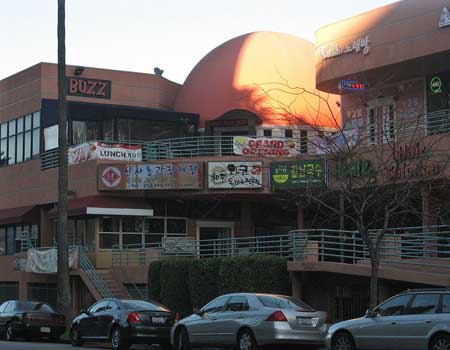
Needless to say, the Derby was a busy place. And, for the most part, despite a couple of the aforementioned tales, it produced an attractive and positive atmosphere. Thus, two more branches would open, one in Beverly Hills farther West on Wilshire and a Drive-in version in Los Feliz (left). But, nothing good lasts forever. As times changed, the very first Derby was moved from 3427 to 3377 Wilshire, but a change of venue couldn't save it. All of these eateries were vacant by the eighties and half of them were demolished. The Hollywood branch, the most kickin' of them all, is completely vanished from Vine Street, perhaps the greatest loss. The space originally known as The Brown Derby in Los Feliz still stands as a Louise's Trattoria. Originally scheduled for demolition, this locale was saved by history buffs who made it a cultural landmark. The original was too destroyed, but the curious dome that was once the top of the giant hat still sits at the top of The Brown Derby shopping center at 3377 Wilshire. It is currently a Korean restaurant, so one can technically still eat in the Derbies of Los Feliz and Los Angeles, even if one is not technically at the Derby.


3377 Wilshire and the remnants of the giant ol' Derby hat.


As silly as it might be to want to hold onto something that represents but cannot bring forth the past, there is still a nostalgia felt for the most famous of Hollywood hats. The thrill of sitting at a table once enjoyed by Jean Harlow and William Powell would certainly be something any film buff would enjoy. As it is, we have to take refuge in the faded memories alone. For those hungry for more, you can still wander to that corner of Hollywood and Vine and imagine life as it was. You can even order your own Brown Derby cookbook, (I just made the "Cobb" and it was to die for) or a replicated caricature of your favorite star. Sadly, that's the most one can hope for, but perhaps it's enough. Even in Hollywood, you can't go home again. Too bad. I could really use a dish of Grable with a side of Grant...

HOT SPOTS in CA: The Brown Derby