Download Games

Recent Posts

Showing posts with label Joseph L. Mankiewicz. Show all posts


Linda Darnell: the "Glory Girl."


Linda Darnell was just a regular girl from Texas, but most importantly, she was just a girl. Scooped up by Twentieth-Century Fox when she was just 15-years-old, her adolescent, romanticizing mind would become both awestruck at her good fortune and dumbfounded at the illusion it turned out to be. Her dream-come-true turned out to be a malfunctioning nightmare that clipped her young life short after robbing her of her youthful innocence. Linda Darnell was a beautiful, fresh creature forced into an environment that didn't suit her naivete nor cater to her vulnerabilities. Like a tortoise without a shell, she would come to seek refuge where she could find it: in her work, in her dreams, in alcohol, in denial... But nothing could protect her from her own violent fate-- when the living Hell of her life and torment came to claim her, suffocating forever the little girl hopes that had promised a castle in the sky and brought her instead face to face with the Big Bad Wolf. But shed no tears for this casualty: she was a tougher cookie than you think...


How is it that we all start out on the same end of this yellow brick road, but wind up in different places? A great many on their travels decide to turn around, for "there's no place like home." Others get lost in the seductive poppy fields; others' routes are cut short by their own personal wicked witch. Very few make it to the Emerald City. Linda was one of those who thought she had arrived only to realize that she had landed somewhere else. The "witch" of her life, as is too often the case, was her mother. Oh, mother... What a complicated relationship. The love and support of good parenting seems to be at the backbone of nearly every success story, while every Hollywood victim seems to be plagued by the lack of it. For every Ginger Rogers there are a dozen like Harlow, Lake, Flynn, Bow, and Gilbert. So it was that Linda by bad fortune was born to Maggie Pearl Brown. This is not to say that Pearl was a wholly bad parent, bereft of maternal instinct, nor that she did not truly love her children. Certainly, the woman had her good qualities. Her flaw, however, was a fatal one in that she projected all of her own dreams and desires onto her daughter Linda's back. What she failed to accomplish for herself, she vowed to vicariously triumph through her second born-- the most beautiful of her children, the most talented, and also the one most like herself. To understand the life of Linda, you have to understand Pearl.


Linda with her mother, Pearl.


Pearl was the daughter of Mary York and Thomas Gaugh Brown. Her father passed on his half-Cherokee blood to his tempestuous daughter, whose restless unruly spirit yearned for an exciting life outside Clifton, TN. A beautiful young woman, she enjoyed and craved attention, but was loathe to settle down in the conventional way and start a home and family like the other girls. Inside her beat the heart of a wild thing, and her "otherness" shirked convention and jumped into the arms of Lawrence Ketroe after her father's untimely passing. At 14, she was married, and soon she had birthed two children: Richard and Evelyn. Larry's ambitions were ill defined, and after the family ran out of cash, Larry ran out on them. Her dreams dashed, Pearl now found herself a lone mother of two living in Texas. But the grief that resulted from her youthful impetuosity was coupled with an iron will. For all her faults, she wanted to provide for her children-- she may be temporarily beaten, but broken she was not. Forced to put Richard and Evelyn in temporary care at an orphanage, Pearl went into a rage when she learned that they had been adopted by new parents and were forever out of her reach. Here, the last tether of tenderness in her heart seemed to snap. Completely alone, Pearl obsessively embraced religion to keep her sanity. Her luck changed when she made the acquaintance of a bashful and soft-spoken postman, Calvin Roy Darnell. Intoxicated by her energy, he married her. The two moved into a modest house in Oak Cliff and had four children together: Undeen, Monetta, Monte, and son Calvin, Jr. (In an ironic twist, Pearl also discovered her two eldest children, Richard and Evelyn, living mere blocks away). At first, Pearl put more focus into pretty, eldest daughter Undeen, hoping that through dancing and elocution classes the younger party could finish what her mother had started. Undeen was not an entertainer, however, and proved both un-gifted and unwilling in the realm of performance. But Monetta, who was born with her mother's same dark, intense features, too seemed to inherit her eager gift for the stage.


Linda at about 14, dressed to the gills for one of her talent shows.


The question remains, did Monetta truly want to become a star, or was she brainwashed from her earliest memories to think that was what she wanted? A natural talent, Monetta's soft beauty and amiable nature made her easy prey for Pearl's ambitions. While Linda would inherit a temper to match her mother's, it was not as intense nor as frequent in its eruption. Monetta was "sweet" and well-liked whereas her mother was erratic, or as son Calvin put it, a "fire-breathing dragon." Monetta did not argue Pearl's wishes, wanting to please her and hoping that in doing so she could earn the love and affection that she had always craved. Monetta was thus crafted into a sensitive soldier: obedient, focused, and constantly stressed. So adamant was she that she had to become a movie star that she never stopped to ask if that was what she truly wanted. She found little time to play with the kids at her school, where she was well-liked but a bit ostracized for her impeccable appearance, far too mature for her years. Most of her time was spent at home, studying, learning piano, performing skits, or cavorting with the multiple animals that were housed with her family: chickens, turtles, rabbits, etc. It was a wild life, indeed. Monetta proved a model student who balanced her good grades with daydreams of stardom. She began performing in talent shows, usually singing "Alice Blue Gown," modeling, dancing, and even performing in some minor theaterical productions. As she was only a young-un when she really started making the rounds, she was coached by Pearl to tell judges that she was older. Despite her self-effacing nature, Monetta could be determined, which is what caught the attention of scout Ivan Kahn. Charmed by Monetta, he was shocked to learn that she was only 14! A screen test was scheduled, and though Fox was interested, Monetta's age posed a problem: too young for an ingenue, too old for child roles.


Linda stars opposite her childhood crush Tyrone Power in The Mark of Zorro.


Undeterred, Monetta diligently kept in touch with Fox while concurrently landing a short-term contract at RKO for their "Gateway to Hollywood Contest." The competition intrigued Darryl F. Zanuck, who decided that he wanted Monetta at Fox after all, with a couple of stipulations-- she change her name to Linda, and she leave the finagling Pearl behind. By now convinced that this was her own dream and determined to escape Pearl's clutches, the new "Linda Darnell" made no objections and made her big debut in Hotel for Women. Life was good. Living with Undeen in her early Hollywood days, Linda quickly became accustomed to the long hours, publicity gamuts, and the art of film acting. Suddenly, the little Texan girl was being cast in films opposite her crush Tyrone Power: Daytime Wife, Brigham Young, The Mark of Zorro, and Blood and Sand. In most of her early roles, she portrayed the young, virginal figure-- American as apple pie and sweet as candy. Yet, the flash was not enough to alter her sensibilities. Linda did not become a party girl, but preferred to stay at home and read or prep for the next day's work. Still a teen, Linda may have been intoxicated by the freedom-- something that she had never experienced under Pearl's control-- but she was still impressionable and uncertain on her own. Since her parents' marriage was long since one in name only, and Calvin had preferred life outside the home, Linda too was longing for the paternal figure she'd never really had. For this reason, she quickly fell under the spell of the attentive cinematographer, Pev Marley. With a 22 year age difference, few in the community saw it coming when they eloped on April 18, 1943.


Linda shocked fans and critics with her sultry, stunning turn in Summer Storm.


Pev provided the shoulder Linda needed to cry on, the support system that bulked up her confidence, and the sounding board that advised her in her career. Despite this, the marriage was a rocky one. With Linda's insecurity and tender age, arguments and misunderstandings were imminent, and Linda's personal pain was only deepened when she discovered that she could not bear children. The result, adopting daughter Lola, brought some light into her life, but constant threats of divorce and reconciliations made her private life a hazard, especially after she moved her entire family out to California and had to contend with Pearl's jealousy and constant implications of ingratitude. Ironically, Linda's career was soaring. Growing sick of her sweet girl roles, she turned the tables by showing up as grown woman with an edge in films like Summer Storm and her greatest triumph A Letter to Three Wives-- which incidentally ignited a passionate affair between herself and director Joseph L. Manckiewicz. She hoped the hot and heavy film adaptation Forever Amber would be her true star-making turn, but it failed to draw in the expected business. A success it was; a legend of filmmaking it was not. The experience nearly killed her, as she was on a strenuous diet that induced multiple collapses on the set. Her unfortunate crutch during times of woe was the bottle, a habit taught her by her husband. Under the influence, the normally kind and sweet-natured Linda became angry, unmanageable, and filthy of tongue. As her marriage finally crumbled, Linda found herself on her own once again, especially after her contract with Fox was cancelled-- a result of the new-fangled invention known as television that was picking off stars one by one. Suddenly, the phone stopped ringing, parts were few and far between, and Linda was left to face herself for the first time.


Linda's role in A Letter to Three Wives was her favorite and her most 
remembered. Who can forget the line: "What I got don't need beads." 
(With Ann Sothern and Jeanne Crain).


Having grown up on dreams of film and then later on film sets, life outside the movies was unfathomable. Suffering too much too soon, Linda had developed into a lost child of sorts. She was raised as an adult and had matured into a disconcerted infant. Once a star, she was already out of work at 28. Linda took jobs in television and found herself to be a natural actress on the stage-- an experience she found more gratifying than any of her film work-- and she too sought comfort in love, marrying twice more to Phillip Liebmann and Merle Roy Robertson-- both unsuccessful. To cleanse her soul, she devoted herself to charity, opening up "The Girls Town of Italy" and working with "The Kidney Foundation," but it did not salve the pain of her own disintegrating relationship with her daughter Lola nor the pain of discovery that her long time lover's latest film-- The Barefoot Contessa, which Mankiewicz had penned for her-- had gone to Ava Gardner and not herself. Unsuccessfully freelancing, Linda landed roles here and there, but after Zero Hour! in 1957, she would be off the big screen for seven years. Stage roles and nightclub acts became the main sources of her income. After her third marriage collapsed, she tried to commit suicide multiple times via overdose, but was fortunately saved. Her home and belongings were auctioned off, and Linda was right back where she started: nowhere. Linda suffered through a bout of alopecia areata, the death of first husband Pev-- with whom she had remained friendly-- and unemployment, but still she would accept help from no one. She was determined to build herself back up on her own terms, as she had never done before. The process strangely brought her closer to Lola, and friends started seeing the sweet girl that they had always known re-emerging from a cocoon of bitterness and cynicism, which for years had become her only protection.


Fox had hoped the Forever Amber would be the equivalent of Gone with the Wind 
for their studio. While a financial success, it was not a windfall, and it was a 
bitter disappointment for Linda. (With Cornel Wilde).


Life seemed to be turning in the right direction again when Linda was cast in a cameo role in Black Spurs, and she was a hit with the cast and crew-- all who delighted in working with a legend who was as kind and down to earth as they had always imagined. Staying with longtime friend Jeanne Curtis in April of '65, Linda was determined to fix her finances and get back on track. Late on the night of the 8th, she saw that Star Dust, one of her earliest films, was playing on Television. As a lark, the group, including Jeanne's daughter Patty, sat watching the film, then everyone went off to bed-- except for Linda, who as always was suffering from insomnia. Some time in the night, the house caught fire. The three women were able to reach each other, and through the smoke and flames Jeanne managed to get Patty out an upstairs window, but when she turned behind her for Linda, her friend had disappeared. Jeanne made it outside and waited for the appearance of her friend, but Linda's charred body would not emerge until the fire department arrived and barely saved her life. With ninety percent of her body covered in burns, Linda held on for thirty-three hours as friends and well-wishers flooded her room with flowers. At 2:20pm on April 10, 1965, Linda Darnell made her final exit at the age of forty-one. The news was kept from Pearl, who passed on less than a year later.


Linda's beauty was always mixed with a wholesomeness that 
made her castable as the girl-next-door or
 man's most dangerous threat.


A shooting star is here and gone, seen only by a lucky few before it disappears into the dark recesses of space. So too was Linda's short life a "blink and you'll miss it" affair; her stardom a phenomenon so brief that attempting to catch it out of the corner of one's eye is certain to result in a sort of existential whiplash. Too much of Linda's life was built upon a fable-- a dream that stardom would bring her happiness and fulfilment. Hollywood became a religion to her, one she practiced devoutly, until her faith was pulled out from under her by time, circumstance, and perhaps simply the cruel hands of fate. In her later years, though still young years, Linda would for the first time discover herself as a human being, question her desires, and attempt to clean up the mess that a lifetime of delusions had made. Just as she started to embark on her second chance adventure, all hope was snuffed out. Luckily, Linda did not fade away with her last breaths. Her memory is still cherished by those who knew her-- friends like Ann Miller who recall the friendly, old-fashioned girl with a love of animals and a generous spirit. The innocent girl who was tread upon and manipulated by a corrupt business too remains gorgeous and unaltered in the films that gave her the only peace she ever knew. Whether one prefers the doe-eyed Linda or the femme fatale, her films are there to satisfy. With the best of her left on the silver screen, even the savage ending of her life cannot tarnish what we hold dear. As Keats said, "A thing of beauty is a joy forever./ Its loveliness increases; it will never/ Pass into nothingness." And so it is that Linda's "Star Dust" lingers, and we remain mesmerized.

STAR OF THE MONTH: Linda Darnell


Cecil B. DeMille- Director and Renaissance Man.


That's right, this time around I chose to feature a director. Not just any director-- the director. The name DeMille still has a powerful resonance and serves at times as the very definition of Hollywood itself. This makes perfect sense, being that ol' CB was one of the founding fathers of this luxurious place we know as La La Land. And trust me, luxury has everything to do with it.


While DeMille was an artist and craftsman, working behind the scenes in the original days of Hollywood-- back when orange groves and pepper trees lined the major through street of Prospect-- at heart he was a showman. In fact, he studied acting first, attending the same school at which his father-- a playwright-- had once taught: The American Academy of Dramatic Arts (ring any bells?). Taking the brains of his father, the passion of his mother, and the flamboyance of family friend David Belasco, young Cecil matured from a curious and ambitious youth into a vivacious and unstoppable entrepreneur. He took odd jobs in the theatre circuit-- writing plays, directing, producing, even acting-- all of which he could perform ably, but it wasn't until a partnership with Jesse L. Lasky and Sam Goldwyn brought him into the cinematic world that his life was forever altered-- and our world as well. His first directorial effort, The Squaw Man, made with the help of Oscar Apfel, is still historically cited as the first full-length feature film made in Hollywood.


Jesse L. Lasky, Adolph Zukor, Sam Goldfish (Goldwyn), Cecil and Albert 
Kaufman- Founding fathers of Famous Players-Lasky.


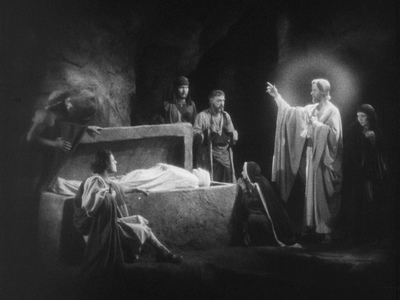
The match was struck, and the fire in DeMille was ignited. He would work without even stopping for breath from 1914-1959. Forty-five years worth of dedication, drive, passion, and vigor would inevitably leave behind a legacy of unparalleled celluloid glory. After his contemporaries, including hero D.W. Griffith, disappeared into obscurity, DeMille always marched on, his energy for his work kept alive by the devout love of his craft. As the times changed, DeMille may not have exactly changed his own style, but he allowed it to expand, pushing the envelope further and further each time with respect to his artistic capabilities and his aesthetic extravagances. He loved movies, and he watched them as much as he made them, keeping up with the latest directors, the latest techniques, and the newest innovations. Over time, he fell into the immaculate cliche he had contrived for himself, that of the egotistical mouthpiece of God. His epic religious features, meant to strike the fear of a higher power into his viewers, too allowed them to indulge unapologetically in their sensual sides. While every film preached a lesson of love, brotherhood, and humility before one's maker, it too presented a very thorny and enjoyable segue on the crooked way to righteousness.


The King of Kings- DeMille's piety. (H.B. Warner as Christ).


Herein we have the two DeMille's: the craftsman and the poet, the moral liberal and the political conservative, the lover and the fighter, the tactician and the showman. DeMille is either accused of being a slave-driving fascist-- marching around the set in his boots and riding breeches, followed everywhere by his chair boy, and shouting out brash commands through his megaphone-- or a dastardly seducer-- injecting his sexual, sinful, and exuberant films with a moral lesson simply to get them past the sensors. The truth is, both versions are true. "Indulgent" is, in fact, the best word with which to describe CB. His brimming intelligence yearned to ask every question, his passionate side sought to fulfill every pleasure, and his spiritual side hoped to do honor to the only being he was humble before, God himself. His silent films remain dangerous and inventive contributions to a quickly growing and expanding medium, and his sound pictures have found their place in hedonistic kitsch. But in either case, the one unifying factor is detail: the composition of every enchanting frame in every rich scene. DeMille produced vivid, living texture-- films his audiences could very nearly reach out and touch. It is this reason beyond any other that they last. Beyond the story, beyond the cheesy dialogue, beyond the special effects that still leave directors like Steven Spielberg and Martin Scorsese spellbound, is the painterly, fluid, lusciously dripping quality of each masterpiece. This is why DeMille is synonymous with "Classic."


The Affairs of Anatol: DeMille's hedonism. (Gloria Swanson, the woman
he made a star, and Wallace Reid).


As controversial as DeMille remains, his lasting imprint on cinema is justified. But his impression was left on more than the screen. Those who knew him in his life were struck by how this cinematic God could so seamlessly come back down to earth. Many personal accounts recall the tenderness with which he dealt with those he loved and the generosity he provided to those in need. After his father passed away in his youth, the adult CB would always provide for his mother and even his brother, Bill (who too was a director, though a less notorious one), and his wife and children-- oh, and his three mistresses, who were not lookers but were intellectually vibrant and integral to his life. When actors from the silent period witnessed their careers disappearing into the abyss of sound, Cecil always found them parts in his films. He and his wife, Constance, began many charities, particularly for children and women. He lavished friends with gifts, enjoyed his wealth while living simply, and lived each day with the ambition of sucking all the marrow he could out of life. This he did up until the end, when, in 1956, his determination to re-make and improve upon his original silent film, The Ten Commandments, nearly killed him. In fact, perhaps it did. But he succeeded, and his last directorial effort became the pinnacle success of his career, (though The King of Kings remained his proudest film).


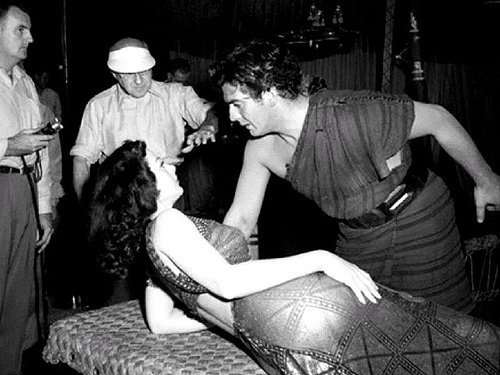
 Samson and Delilah: the DeMille unity. 
(Directing Hedy Lamarr and Victor Mature).


We cannot imagine a Hollywood without DeMille, for he was and is Hollywood. He built it as if with his own two hands, and he made it something bigger, something greater, something grander. Cecil and cinema are inseparable, which is why he was the necessary ingredient in Billy Wilder's Hollywood masterpiece, Sunset Boulevard. His mere name carried the context needed to relay all that movies are, all that they endow, and all that they represent. While a director in memory, he was at heart an actor, putting on the greatest show of his life by being the untouchable, indefinable Cecil B. DeMille. What he did, no one else could do, and the effort has taken down many men, (as Joe Mankiewicz could attest after his own Cleopatra debacle). CB gave his movies everything he had and gave us a limitless world in return. Vincent Price once said that you weren't a movie star until you had appeared in a DeMille picture. I suppose it goes without saying that you aren't a film lover until you've seen a DeMille film. With that said: All right, Mr. DeMille. We're ready for your close-up.

STAR OF THE MONTH: Cecil B. DeMille

America's Eternal Sweetheart: Judy Garland.


The contradiction between the real and the reel life has always been stark. Still, despite the fact that we know that our stars and the drama and extravagance of the cinematic world are glamorized, we somehow come to identify a screen persona as the person herself. Judy Garland, therefore, remains a bashful, awkward, yet enchanting innocent. She represents the eternal, hopeful child within us, and her voice echoes the power and passion dwelling inside even the most silent or insecure of vessels. She was the Hollywood ugly duckling who blossomed into a beautiful swan, emerging as the personification of our own transformation of self-conscious youths to (hopefully) secure adults. Her humility in her roles and the profound grace of her musicality have made her eternal-- the girl unanimously loved and forever remembered. She is the only performer with the ability to gain our trust and carry us far and away, even over the rainbow. In front of the camera, Judy was at her best, but oh how different the tale of her personal life. As delicate and lovable as her Betsy Booth was, just as dark and tormented was her true nature. Judy Garland was ever-lovable. Frances Gumm, however, was plain shocking.


With good pal and constant collaborator, Mickey Rooney,
as Betsy Booth in Love Finds Andy Hardy.


A career in performance was almost inevitable for little Frances. Her father, Frank, who was said to have had an angelic, entrancing voice of his own, was notorious as an entertainer, singer, and theater manager. Her mother, Ethel, was an ambidextrous and driven, if not equal, talent who often played the piano while her husband sang. All three of the Gumm sisters would be pushed onto the stage, but it was the captivating presence and awe-inspiring voice of the youngest girl that would cause the most ruckus. After Ethel recognized the pint-sized girl's larger-than-life talent, all hopes for a normal childhood or a normal life were gone. Though Frances was a mug from the start, adoring life in the spotlight and the love of an audience, she was too young to be positioned as the family breadwinner. After her beloved father passed away, leaving her completely at her mother's mercy, things only grew worse. Smothered, ordered, and condescended to, she would grow up as many child stars do-- with brittle bones, never knowing the strength of independence or the liberty born of personal choice. Thus, the Judy Garland born at MGM in 1935 was destined for stardom and cursed with insecurity.


In her most famous role, as Dorothy Gale in The Wizard of Oz.


The more Judy's onscreen persona was solidified as the good-natured, shy girl-next-door in films like Love Finds Andy Hardy or Babes in Arms, the more she tried to create a vastly different identity in her personal life. In her early roles, she is the hopeless romantic who is always passed over, which was indeed reflective of reality. However, Judy did not sit waiting for Prince Charming to wake up and notice her; she made him notice. While contending with beauties such as Lana Turner, Judy-- who was referred to by LB Mayer as his "little Hunchback"-- hurled herself into romance after romance in the hopes of finding absolution-- to prove her screen self as false and find herself as a woman. Thanks to Mayer and her casting in dowdy roles, Judy didn't think she was beautiful, and she never would. She wanted to be Lana, Hedy, anybody. Becoming sexually active early, she tried to disappear into the arms of men who at least in their actions would insinuate that she was someone worthy, someone better. She never understood her appeal, but as she matured, her natural beauty was unearthed from her teenage awkwardness; a dark and intense young woman and a sexual dynamo in lamb's clothing can be seen in Girl Crazy, Meet Me in St. Louis and The Clock. Garland was gorgeous, and this coupled with her charm and humor endeared many men to her, as friends and/or lovers: Artie Shaw, Frank Sinatra, Tyrone Power, Mickey Rooney, Joseph L. Mankiewicz, etc.


Dark Side of a Bright Star.


But Judy's sexual confusion translated to a great many of these romances. In her quest for a loving man to replace her father and establish her feminine identity, she indeed replicated her father-- a homosexual-- by becoming involved with many men who too were homosexual. She married Vincente Minnelli, with whom she birthed Liza. Another lost love of her life was Ty Power, who was bisexual. She also had, or tried to have, an affair with the closeted homosexual Tom Drake in Meet Me in St. Louis, and in later life, she became involved with Mark Herron, who too was gay. In between she had legitimate relationships with first husband, the good-natured but fairly bland David Rose, mostly as a means of escape from her tyrannical mother, and the imposing bruiser Sidney Luft, who was the antithesis of the sensitive, creative, and artistic men whose sexual natures had been deteriorating to her sense of self. (Ironically, Liza would continue the strange trend of impossible love started by her grandmother Ethel by marrying homosexual actor Peter Allen in 1967, at Judy's suggestion). Judy became far too dependent on the opposite sex for gratification, validation, and love. Bled dry emotionally and financially, Judy was never short of men who wanted to give her attention and affection, but she was lacking a strong and supportive man who could give her the freedom of herself.


Revelling in her inner clown in Easter Parade
with Fred Astaire.


Drugs too were a contributing factor. Pumped full of uppers and downers by her own mother by the age of ten, Judy didn't know how to function without the aid of chemical substances. Her emotions were erratic, undependable, and incredibly fragile. When not coddled-- like the child she was raised to be-- on the set, she was stubborn, uncooperative, and chronically late and/or ill. When shown support, favoritism, and friendship, she could forget her insecurities long enough to come to work energized, fresh, and willing. The triggers that set her off were as unpredictable as her nature. A harsh word from Busby Berkeley could send her on a crying jag; a kind word from Fred Astaire inspired one of her best performances in Easter Parade. To be near her was to live in constant fear, as her children could attest, and the need to walk on egg-shells for fear of upsetting her fragile psyche spawned tension wherever she went, which only added to her own nervous energy. In every still photo of Judy where she is not in the midst of singing, there is a barely discernible look of terror in her eyes-- something dangerous-- as if at any moment she may scream out and tear her own flesh off. Haunted, plagued, unglued, she could never seem to pull herself together. But then, she wasn't treated as a person. As writer J. Randy Taraborrelli so eloquently put it, she was MGM's favorite ATM: "deposit drugs-- uppers, downers, whatever-- and out comes money, and lots of it." Her welfare was not a prime concern.


In one of her elegant yet somehow fearful poses.


Raised in a dramatic world, Judy knew how to feed on the drama. She had several failed suicide attempts, which garnered public sympathy or antipathy depending on who was asked, but in each case her self-mutilations were barely injurious. She would cut at her throat with glass, just enough to draw blood, but not enough to do harm. These were not quests for death, but loud and resounding cries for help. Cries that went unanswered. Judy had to be her own defender, her own champion, but the only place she felt truly strong and secure was on the stage. After liberating herself from MGM in a bittersweet moment in 1950, she returned to public singing and underwent another transformation as the travelling, musical orator of all human love and pain. Judy wanted to be a dramatic beauty queen, of which she had the capability, but her gift was entertaining. When she hams it up onstage in "A Couple of Swells" in Easter Parade, she is magical in her absurdity. This is what audiences loved about her. This is what she brought to the stage, along with her supreme voice. Every time she sang "Over the Rainbow," no matter how old she got, it brought tears to her own eyes and the watching eyes of her fans. Up and down and up and down, with movie performances sporadically thrown into her older years, Judy journeyed, singing to whomever would have her and hoping that there would at last be an applause to embrace her and make her feel safe at each show's end.


In a brilliant shot depicting the dual nature of one of
Hollywood's most complicated ladies and the
mirror that haunted her.


Judy's show was over on June 22, 1969 when she died of an accidental drug overdose at the age of 47. She was found hunched over on her own toilet. The little girl whose brightness and innocence had wooed us all the way to "Oz" had disintegrated under the pressures and clawing of a life gone haywire. How do you consolidate two such individuals? How can both exist from and within the same being? Such a thing seems impossible. There is one who lives on in wide-eyed wonder in an imaginary world of vibrant color and willful triumph, forever skipping on the yellow brick road, and there is another whose life was turned upside down by the ravages of the tornado and forced to deal with the wreckage left behind. One is a dream; another is a truth. Judy's final victory is that her fans have embraced the dream, and it is into this dreamworld that she continues to draw us like a nonthreatening siren quelling us with the lullabies and beauties a harsher world would otherwise not allow. Bless her for that.

STAR OF THE MONTH: Judy Garland


During the last gasps of the studio era, there were no bigger stars than Marilyn Monroe and Elizabeth Taylor. Both talented, beautiful women and indomitable forces, these ladies were greatly valued by the studios for their box-office appeal. Their roller-coaster love lives and love/hate relationships with the tabloids also bound them together in a kind of celebrity sisterhood. Aside from this, two women never had less in common. This would become blatantly obvious during the Twentieth-Century Fox cataclysm of 1962 when the faltering studio's prayers for salvation rested on these two stars and their respective projects. While Liz drained the Nile dry in Egypt (actually Rome), Marilyn's illness infected the lot at home, and Fox could only pray that box-office receipts would recoup their almost unfathomable financial losses when Joseph L. Mankiewicz (director of Cleopatra) and George Cukor (director on Something's Got to Give) finally called "cut." This was not to be. The Fates were against the Goddesses this time, and the Moguls would pay the forfeit. In history, Liz Taylor is remembered in this debacle as the frothy shewolf who ate up Twentieth-Century for breakfast, but at the time is was Marilyn Monroe who was held up as the sacrificial lamb, publicly blamed for the collapse of yet another Hollywood empire. As in most cases, it is always the drama behind the scenes that is most riveting. Today's Movie: The Buck Stops Here. The Stars: Liz Taylor and Marilyn Monroe. Aaaaand, action!!!


Fox needed a hit. A Supreme Court decision had abolished studio-owned theater monopolies in 1948, cutting profits in half. In addition, the phenomenon of television continued to thrive and keep viewers at home. Cinema was hurting. Twentieth even had to sell the land on its backlot to real estate developers to stay afloat: thus, when you're shopping at Century City Mall, you're actually walking on the sacred ground that was once Fox Studios. The idea to re-vamp the all time vamp Theda Bara's Cleopatra (left) was not a new one in 1959. Cecil B. Demille had already done so with the help of Claudette Colbert back in 1934 and George Bernard Shaw's play Caesar and Cleopatra was translated to film with the help of Vivien Leigh and Claude Raines in 1945. When producer Walter Wanger suggested that the time had come for yet another makeover of one of history's most notorious vixens, it seemed like a surefire success. Love, tragedy, war, sex, betrayal: it was a soap on wheels! Originally, the budget was a minimal one, with the studio hoping to produce an attractive, cheaply made B-movie to reel in major profits. Because of this, relatively unknown newcomers were suggested for the lead. Joanne Woodward's name came up, but it appeared that Joan Collins would be crowned as the chosen Egyptian deity. However, Wanger had envisioned a much more elaborate production; an epic no less. He wanted to make the movie to top all movies, one that he proposed could save Twentieth. Using set design artists to woo the money men, elaborate sketches were prepared to lure them into his dream. Surprisingly, President Spyros Skouras signed on. Thus, out of a small idea and a story as old as time itself would grow one of moviedom's greatest monstrosities.


Now that the picture was given the green light, Director Rouben Mamoulian was tasked with giving life to the old Bara film. The script was dated, appearing nearly like parchment itself when unearthed for editing, and it needed hefty revisions. Nunnally Johnson was one of many writers who contributed to sprucing it up. In the lead roles, Peter Finch was cast as Caesar, Stephen Boyd as Antony, and after discussing Audrey Hepburn and Sophia Loren as Cleopatra, Wanger put in his vote for Elizabeth Taylor, recently released from her MGM contract and for the first time working as a free agent. Not everyone was in favor of this idea. Liz (right) was not only a contractual liability, being constantly ill, but she was also going through one of her fan slumps. After the death of her husband, producer Mike Todd, Liz had found comfort in the arms of friend Eddie Fisher, snatching him out from under Debbie Reynolds's unsuspecting nose. She was almost unanimously declared a homewrecker. Still, few women packed the power or punch of Liz in those days, and this alone was enough to suggest that only she,  the diva extraordinaire, could portray a woman who had once been the most powerful female in the world. Liz herself had doubts. For this reason, when 20th called with the offer, Liz told new hubby Eddie to ask for $1,000,000. No one was more surprised than she when she got it. Or was she? A savvy business woman, Liz knew her star power. Uncertain whether or not she really wanted the role, she took a gamble and won big, becoming the first performer to earn a mil' for one role. She would make further stipulations in her contract that offered her additional income: the implementation of her deceased husband's groundbreaking, wide-angle camera, the Todd-AO, for which she too got royalties. Crafty, crafty.


For the time being, this all seemed like chump change. All the money the studio was sure to make off the film would more than make up for these early, lush expenditures. Oh, naive vanity. When cameras started rolling at Pinewood Studios in London (left) in September of 1960, the film was almost immediately doomed. For starters, the weather was horrendous. London was no Egypt. The rainy weather caused the elaborate sets to peel, the transported tropical vegetation had to be replenished almost daily as it died, and the weather too was wreaking havoc on Liz's frail health. She was able to appear in some wardrobe tests but overall was absent from the entire shoot. Mamoulian was forced to shoot around her, focusing on Finch and Boyd, but there was little to be done without the central character. When Liz's illness lapsed into pneumonia and induced a coma, she lay at the brink of death at her hotel. Luckily, a doctor was attending a party in another guest's room and was found, brought to her bedside, and able to stabilize her until an ambulance was summoned. An emergency tracheotomy was performed, the scar from which can be seen in the subsequent film. It was just disaster upon disaster. Mamoulian eventually walked when Finch and Liz continued to complain about the poor nature of the almost juvenile script, leaving the film with no director. As per Liz's contract, she would approve but two replacements: George Stevens or Joseph L. Mankiewicz,  the latter of whom she had just worked on Suddenly Last Summer. It was Joe who got the job. This big coup in addition to Liz's survival after her brush with death, which brought back a wave of fan sympathy, made it seem like Cleopatra still had a shot at being a success. Joe moved the set to Rome and began re-writing the script himself. Act Two was about to begin.


More drama followed as the film was pushed into production. Hard-working pro Mankiewicz, a wizard both with the camera and with words, wasn't even halfway finished with the script when he was forced to start filming. He was therefore stuck shooting all day and writing all night, kept awake with a series of drugs that left him an overworked zombie. Forced to shoot in sequence as a result, certain actors sat around while being paid with nothing to do, and already built sets were left vacant and un-utilized. Fox was bleeding money. The cast had also changed, as the months that had lapsed between the initial call to action and the current production had taken Finch and Boyd out of the running. Joe happily called upon friend Rex Harrison to take on the role of Caesar, and Fox bought out Richard Burton's stage contract on "Camelot" to win him over as Antony. It was a steal, or so they thought. The soon shocking love affair of Liz and Dick (right) caused enough of a scandal to earn even the Pope's wrath. Liz too was enjoying the luxuries of her own house-sized dressing room, gallons of champagne, and her favorite chili delivered all the way from Chasen's in West Hollywood, all at Fox's expense. This, in addition to the exotic costuming of 1000s of extras and the intricately designed and detailed sets, led to Cleopatra costing $70,000 a day alone to produce. Spyros Skouras was sweating bulletts, Liz and Dick were drawing tabloid ire, and Mankiewicz was left nearly crippled when one of his daily injections hit a sciatic nerve. However, the film had become too expensive to just drop. Fox needed another savior. Their only other bankable star was called upon to save them with a quick, fun romantic comedy. Act Three-- Iris in, Enter: Marilyn Monroe.


Fox again went digging for a script in their vault that could quickly and efficiently be produced and rushed into theaters. The success of My Favorite Wife in 1940 suggested that a slightly modernized re-write with Marilyn Monroe, Dean Martin, and Cyd Charisse would fare equally well, if not better, at the box-office. However, there were the same hesitations: Marilyn was notorious for holding up productions with her lateness, which resulted from her insomnia, which resulted from her nerves, stresses, and performance jitters. Still, the studio was forced to hedge its bets, and they decided to roll the dice once more with their most famous star. They were right to worry, for almost from the beginning, things went sour. A power struggle was constantly ensuing between director and star. Initially, Nunnally Johnson was called in (yet again) to help with rewrites of the script. Marilyn approved of this, as she had enjoyed working with Nunnally on How to Marry a Millionaire. Nunnally was attentive to Marilyn's own ideas and was ably trying to tailor her character specifically for her. Cukor, however, was not happy. He wanted to maintain the charm of the original 1940 film, and effectively had Nunnally replaced by his own choice, Walter Bernstein. Marilyn took the snub admirably, but was to suffer another one. At a phenomenal wardrobe test in April (left), in which Marilyn looked fresh, beautiful, and softer than ever before, Cukor was noticeably absent. Not much later, producer Henry Weinstein, who had replaced Cukor's friend David Brown, had to suffer the shock of finding Marilyn in the throes of an accidental overdose, from which she quickly bounced back. In fact, many marveled at the seemingly unfazed way her doctors reacted to what must have been a regular occurrence. Indeed, the suffocating nature of her relationships with both her psychiatrist Dr. Greenson and her acting coach Paula Strasberg would be future matters for the production to contend with. Cukor abhorred Paula's presence and executives were a little unsettled at the way Greenson, a shrink, was handling Marilyn's business affairs. He at one point assured them during a moment of hesitation not to worry because he could "convince Marilyn to do anything." Prior to the first day of shooting, Marilyn attended a script meeting, then flew to New York for a private acting class with Lee Strasberg, from whom she sought advice for her character. Unfortunately, she returned to Los Angeles with more than Lee's counsel; she too caught his cold.


For weeks, Marilyn was unable to come to work. Diagnosed with chronic sinusitis by the studio's own doctor, Lee Siegel, Fox thought it was just a case of the actress crying wolf. However, many saw her struggling-- blinded by headaches, shaking with chills, and barely able to rise to her feet. Her housekeeper Eunice Murray witnessed her waking up in cold sweats, and her own chauffeur sent her back into the house when he saw how ill she was. Head of Production Peter Levathes himself bore witness to her poor health, and tried to have the production pushed back until she was fully recovered. A resounding "No" echoed through the vacant Fox back lot. In the meantime, as during Liz's illness on Cleopatra, Cukor was forced to shoot around Marilyn. He did scenes with Dean and Cyd, scenes with the child actors, the supporting cast, whatever he could. Marilyn, who was eager to begin working, finally forced herself to come to set, though her initial attempts resulted in collapse. In later years, certain members of the cast and crew would maintain that Marilyn was not, nor did she ever appear, ill, which added to the false perception that her entire illness had been contrived. It had not. However, the studio had started administering drugs, given by Siegel, to get her going. Marilyn was giving daily injections-- "hot shots"-- of amphetamines. So, when Marilyn arrived to set, ready and glowing, people did not realize the true source. The drugs masked her symptoms and implied a picture of health. However, there were also witnesses who saw Marilyn faint on the set under the strain or witnessed her trying to psyche herself up in a corner, barely able to stand, because she was light-headed and dizzy.


The infamous kiss heard 'round the world.


It is interesting to note the strange similarities both films exhibited. Both sets were plagued by chronically ill female stars, who, as annoying as they may have been to executives, were legitimately unwell. Whether or not these ladies were able to psychosomatically induce sickness, which almost seems possible, does not deter in either event from the fact that they were indeed almost deathly ill at various stages of shooting. (Another parallel is that both Liz and Marilyn were raised with a background in Christian Science, and though Marilyn in particular did not adhere to this religion, the effects of the power of mind over body is evident in both of their lives. Suspiciously, whenever plagued by doubt, insecurity, or sometimes plain stubbornness, their health with give out in unison with their waning spirits). However, pros that they were, they both managed to muddle through the shoots, even triumph, doing impressive work-- though the use of drugs on both parts, and sometimes alcohol, helped to carry out this chore. For her part, Liz Taylor's behavior induced Fox to have an ambulance always parked nearby on "suicide watch" as her relationship with Burton grew increasingly tumultuous.


Both films were also driven by almost maniacally detailed directors. Cukor (right with Marilyn) insisted that the set be designed to mirror his own lush abode-- the same pleasure palace designed by William Haines-- and saw that every aspect, down to the exact shade of green on the trees, was the same. He too was suffering the physically debilitating effects of one of his crash diets-- aka starvation. For his part, Mankiewicz was working overtime, equally driving himself to a mental and physical breakdown, and essentially performing the duties of producer, director, and writer. The overly ornate designs of the Cleopatra sets, which he made sure appeared authentic, were diligently and expensively crafted-- some with pure gold leaf. The Roman Forum was designed to be three times its actual size, because even that wasn't deemed grand enough. Every aspect, down to the smallest walking stick had to be extravagant, and most of these details were only seen for a fraction of a second, if they remained in the final cut at all. However, despite all of Joe's stresses, he was never tyrannical on the set. Cukor on the other hand, who had not gotten along with Marilyn since their Let's Make Love days, took an uncharacteristic and almost sick pride in demeaning his lead actress and blaming her for every little thing that went wrong, though footage shows her maintaining her composure far more often than he.


Liz "arrives" in Rome.

Sex was also a common denominator. Many people recalled the day that Richard Burton marched onto set with a devilish grin and proudly announced: "Well, I finally f*cked Elizabeth Taylor in the back of my Cadillac!" Martin Landau, who must have missed this press release, was however present when the still married Richard strutted into wardrobe and surprisingly laid a wet one on the still married Taylor-- to which Landau internally exhaled an "Uh oh..." For some time, studio heads were fearful that Liz's star power would diminish under the swell of growing public hatred against both herself and Burton. Despite Joe Mankiewicz's feeble attempt to calm the storm with his crack that it was actually he with whom Richard was really in love-- resulting in Richard arriving to work and too laying a wet one on Joe-- the Vatican proclaimed Liz a "whore," the US Congress tried to have her dual citizenship (she was born in England) revoked, and Skouras feared that ticket sales would continue the anti-Liz onslaught. However, when Cleopatra's grand entrance to Rome was filmed-- one of the most awe-inspiring moments in cinematic history-- Liz triumphed yet again. The Italian extras were supposed to scream "Cleopatra!" But instead, they screamed "Liz! Liz! Baci Baci!" (Baci meaning "kisses"). It was at this moment too that many believe Richard Burton truly fell in love with his Queen, for in seeing her incredible hold over the public, he witnessed a force that nearly brought him to his own knees. He went from being the man that was sleeping with Elizabeth Taylor to the man who was infatuated with her. Thus, when Liz bows to Caesar and rises with a smile, her simple wink speaks volumes. Liz the tigress had prevailed.


Marilyn's sexual shenanigans also foiled the set of Something's Got to Give, however her great "arrival" occurred on the stage of Madison Square Garden for President Kennedy's birthday gala on May 19, 1962 (left). Upsetting Cukor and the other execs by skipping out of the shoot to attend the illustrious celebration, Marilyn was assured by Bobby Kennedy himself that the problem would be solved. It was a promise the hot-headed younger brother wouldn't keep. However, the cleverly orchestrated idea to have Marilyn sing a seductive rendition of "Happy Birthday" (complete in a barely there Jean Louis dress) to JFK was not a moment to propel her to the heights of stardom, as Liz's affair with Burton seemed to. It was instead conceived to publicly ridicule her and announce her as the lusty and misogynistic Prez's sexual plaything. In a brash move, JFK had inflated his ego by having his mistress all but publicly announce their affair. He had even given Marilyn private instructions over the phone on how he wanted the song performed. Marilyn knew that she was taking a gamble, even acknowledging the fact that she was about to make a fool of herself before she walked on stage, but she was so in love with and infatuated with Jack Kennedy that she let her need to please and be loved overshadow her reason. The result has remained one of the longest running jokes in history, and it is sad that after Marilyn had worked so hard to rebuild her image as a serious actress, she had all but annihilated such a prospect by illustrating herself once again as nothing but the embodiment of sexual desire. Her absence from the film set to perform this infamous song both infuriated the studio and sent shock waves through the nation. After this, Marilyn's days on Something's Got to Give were numbered.

36 and not too shabby.

Marilyn returned to a hostile setting, drawing antipathy for yet another absence when she failed to report for work after the party. She feared that she looked too tired after her whirlwind trip. This angered Cukor, but was rational on Marilyn's part. Knowing the effect fatigue would have on her beauty, and thus her fans, she used her clout to rest up so she could return only when refreshed and beautiful. When Dean Martin came to work ill, Marilyn too refused to work with him for fear that his health would again impair her own. Irrational as her behavior may have seemed to those on the other side of the camera, all was forgiven when Marilyn bared all for her infamous nude swim, enduring four hours in the water, shivering all the while . Even George Cukor, not Marilyn's biggest fan, behaved like a kid at a candy store when this actress did what she did best: exude sex appeal, beauty, and charm. After this success, Marilyn had a mysterious weekend. She returned on Monday, May 27th, a shell of a woman. There has been much debate over what happened, why she could barely remember her lines, why she seemed completely unglued... Many assumed that it had something to do with her relationship with Jack  Kennedy, who it was theorized had finally severed their relationship. Marilyn's only answer was scrawled on her dressing room mirror in lipstick: "Frank, help me!" Frank meaning Frank Sinatra. Dean himself kicked everyone out of her dressing room and tried to get to the root of his friend's problem. She was finally sent home. Footage shot that day was destroyed by Cukor, who knew how damaging the drug-addled performance would be to his star-- nemesis though she may have been. After pulling herself together and completing a few more successful scenes, Marilyn celebrated her 36th birthday early on June 1st with a decidedly modest party on the set. Cukor refused a real party, but was finally forced to acquiesce to a cake and birthday card after all the day's shooting had completed. The card read "Happy Birthday (Suit)."


That evening, Marilyn went to a fundraiser for muscular dystrophy at Dodger Stadium. After being out in the cold weather all night, Marilyn's health collapsed once again. She relapsed and was unable to report to work the next day. This was the last straw. Marilyn Monroe was fired. Of course, the reasons behind this were more than her supposedly temperamental behavior. In retrospect, Marilyn was not causing any more trouble in LA than Liz was in Rome. Liz too was chronically late, chronically ill, and worse-- chronically arriving to set drunk as a skunk after lunch with Richard. The costs of filming Something's Got to Give were far from the exorbitant expenditures of Cleopatra. The simple fact was that Fox had mismanaged its money, had poured too much into Cleopatra, and Something's Got to Give became the easier project to dismantle. There had in fact been several failed attempts to fire Liz, but she somehow always got out if it, much to the confusion of the executives. Marilyn instead was the one to fall. If ever there was anything to snap Marilyn back into gear, it was the fear of losing her career (she fights back in a strategic George Barris photo, right). After the studio started planting false and salacious articles in the press, claiming that Marilyn was both incoherent on the set, a drug addict, and mentally unstable, Marilyn rebelled. Footage and outtakes of the remains of Something's Got to Give are enough to refute these claims. Marilyn was present and focused on set, normally moreso than Cukor himself. The press release infamously issued by the crew of Something's Got to Give, thanking Marilyn for the loss of their "livelihoods," was yet another false scheme. Horrified by the news, Marilyn issued apologies to all involved. However, no member of the crew knew anything about the statement. It was a planted ploy of Fox to turn the public against its former star. Marilyn had become their scapegoat, but it had been their own mismanagement that was primarily to blame for the film's failure. When Shirley MacLaine and Kim Novak both turned down Marilyn's role out of respect and Lee Remick was announced as her replacement, Dean Martin walked off the set. Without Marilyn, there was no Dean, and no movie.


After forming her own publicity campaign to repair the damage that was being done, Marilyn won her fans back to her side as she always had. She was even able to enlist the help of Fox figurehead Darryl F. Zanuck. Zanuck had been increasingly angered by his studio's gross misconduct, which had impeded the completion of his own masterpiece, The Longest Day, at that time filming in Europe. Zanuck had never been Marilyn's biggest fan, but he at least was able, shrewd businessman that he was, to know the true culprit for the catastrophes of both Cleopatra and Something's Got to Give. As Cleopatra inched closer to completion, after years of hard work, and with Liz Taylor banking $7,000,000 total for her work on the film-- the extra dough resulting from overtime-- Zanuck decided to fly back to America, regain control of his studio, and get Something's Got to Give back up and running-- with Marilyn in the lead. Thus, mere weeks after she was fired, Marilyn got her job back. Unfortunately, she did not live to finish it. Her death was announced to the world on August 6, 1962.


This mural originally only showed Liz and Dick, but
Rex's contract demanded that he be painted in as well.

Cleopatra would finally conquer, wrapping on July 28, 1962. The movie, originally intended to be two separate films: Caesar and Cleopatra and Antony and Cleopatra was cut from 6 hours to 4. Reviews were mixed, with some calling it a triumph and others calling it a "monumental mouse." Fans still came out in droves, proving that Liz and Dick's allure and the public's fascination with them had not wavered. However, theaters were only able to show the film once a night due to its length, meaning that it was only bringing in half of an average film's revenue. For this reason, Zanuck ordered more cuts, bringing the film down to somewhere around three hours. Elizabeth Taylor saw this version when it premiered in London. And threw up. Cleopatra is recalled as one of Hollywood's greatest flops, but in truth it was not. It fared well at the box office, but recouping the film's incredible costs was not something easily done. It wouldn't be until future re-releases and DVD sales that it could completely make up for Twentieth-Century's losses. It went on to win four Academy Awards, and is at least successful in that it is still notoriously recalled today. As for Fox, Zanuck was able to slowly bring it out of its slump and enjoyed another hey-day with the smash success of The Sound of Music.


In the battle of Liz vs. Marilyn, there were no real winners nor losers. Both films, though one incomplete, had moments of brilliance and folly. Marilyn, who longed to be, yet never was able to become, a mother in her private life, is both vibrant and tender in her interaction with the actors playing her children in Something's Got to Give. Her new found sophistication and maturity also present an intriguing and distinguished Marilyn Monroe, one far removed from the elegant yet cheesecake Marilyn of the past. Liz, for her part, possesses both the brass and the class to portray the Queen of the Nile, and though the overly long and melodramatic scenes can lag on the viewer, by the time Cleopatra nears its end, there is a quietness and a dignity present in the defeated ruler and a palpable pain in her sacrificed love. 


It is strange how two such women, equal in stature, parallel in tragedy, and dissimilar in persona, were so closely linked for a brief time. Battling it out for survival-- not their own, but their studio's-- only one would even survive the task. Ironically, Marilyn had lobbied for the role of Cleopatra when the film was but a whisper of an idea years before it was produced, but despite her many talents, Marilyn lost out to Liz's more guttural snarl. This, among other things, is why Liz was for the most part able to triumph where Marilyn failed. Marilyn, impassioned  and shrewd as she was about her career, lacked the killer instinct that could keep her in an impenetrable position of power. Both women were able to get what they wanted, but Marilyn lacked the ability to hold onto it for an uninterrupted passage of time. This fact was evidenced by the ladies themselves at a party thrown by Frank Sinatra in Las Vegas. The two gals had never gotten along too well, perhaps jealous of each other and rightly sensing the threat of an equally beautiful, equally bankable female star. At the party, Marilyn became drunk and was wobbling around unsteadily, causing much concern and annoyance from friend and sometimes lover Frank. In a statement that said more than even she knew, Elizabeth declared to an observing reporter: "Marilyn shouldn't drink if she can't hold her liquor. I know how to hold my liquor." With that, she kicked her head back and took a big swig of her martini. She partied on long after Marilyn was carried upstairs to bed.


Long live the Queen...


HISTORY LESSON: Something's Got to Give and It Ain't Cleopatra