Download Games

Recent Posts

Showing posts with label Judy Garland. Show all posts


The front lobby of The Hollywood Museum. 


After living in Los Angeles for six and a half years, I finally made it to one of the tourist cornerstones of Hollywood and Highland: The Hollywood Museum. You'd think it would be a no-brainer for me to visit this den of cinematic archaeology sooner, but in a way I am glad that I waited. Finding and exploring a new jewel is nice, especially after scouring the whole city and thinking that I'd left no stone unturned. Then again, perhaps the "cheesy" factor delayed my interest. Beings that the museum is located next to a Ripley's Believe It Or Not, I often opted for "not," thinking it was a mere magnet for out-of-towners and that there would be little to engage a true connoisseur's interest (ahem). Well, thank God I finally got bored on a Sunday, because to the museum I did go, and I left more than pleased.


One of the pairs of ruby slippers worn by Judy Garland 
during The Wizard of Oz.


Sandwiched between Ripley's and Mel's Diner, The Hollywood Museum is situated in the old Max Factor building at 1660 N. Highland Blvd. Due to its locale at the old make-up haven, the first floor is almost entirely dedicated to cosmetics and beauty. Different rooms, labeled by hair-color, feature different actresses, and artifacts like Joan Crawford's old make-up case are on display. The "Brownettes Only" room dedicates much of its space to Judy Garland: one of Frances Gumm's original, tiny stage outfits and Dorothy's Ruby slippers are proudly encased for drooling gawkers. The "Brunettes Only" room equally pays particular attention to Elizabeth Taylor, as the "Red Heads Only" does to Lucille Ball.


The dress Marilyn Monroe wore while entertaining the 
troops in Korea (Sorry for the glare).


The museum too, unbeknown to me, possesses one of the most extensive collections of Marilyn Monroe treasures, which are of course shown in the "Blondes Only" room. Her old makeup, famous dresses she wore, and a memorial case dedicated to her untimely death are visible, as is a strange gadget that seems to be an early attempt at the "face-lift." It bears a stronger resemblance to the iron maiden, but for your mug. Needless to say, (or should I say "needles?"), I was scared. Apart from the make-up rooms, the back corridors lead you to a garage where Marilyn's private limousine is parked. I wanted to get a closer look, but was afraid that the monkeys from the Planet of the Apes display would come after me.


The early face-lift: The Max Factor Beauty Calibration Machine, 
still raising eyebrows...


Also on the first floor is an extensive anthology of signatures collected by notorious autograph hound Joe Ackerman. This guy got everybody's John Hancock, and now the majority of them hang on the walls, encased in picture frames according to various movies. The cast of Gilda adorns one wall, Tarzan another, but most happily to me the cast of The Great Dictator was hanging for all to see, complete with the signatures of Paulette Goddard and the Charlie Chaplin. Down another walkway is a room featuring a miniature representation of the barn used as Cecil B. DeMille's first office, used when filming The Squaw Man. This is now known as the Hollywood Heritage Museum, another superb spot. Glamour shots of all of cinema's greatest stars-- Spencer Tracy, Bette Davis, Lon Chaney, etc-- also decorated the walls, along with some beautiful photos of Hollywood's growth from the early, nearly vacant silent years to the bustling times of Schwab's Diner. The temptation to slip one of these portraits under my arm was hard to fend off.


Ackerman autographs from The Great Dictator: Charlie, Paulette, 
Jack Oakie, and Billy Gilbert.


From here I went downstairs to the "Hall of Horrors," which apparently was once a speakeasy, and where now a great many props from classic horror films are on display. I spied the mask of Jason Voorhees, the dresses of Elvira and Vampira, and most impressively the facial casts of some of Horror's greatest stars: Lon Chaney, Jr, Boris Karloff, Bela Lugosi, Peter Lorre, Vincent Price, and Christopher Lee (left). There was more than scary-stuff downstairs, however, and I was pleased with a display showcasing wardrobe from both the 1917 and 1934 versions of Cleopatra. Theda Bara's headdress and Claudette Colbert's gown were both featured. The big finale was the long, dark walk down Hannibal Lane, where a complete re-creation of Lecter's cell stood waiting at the very end. I admit that I got chills when nearing it. As in the film, a folded chair awaited Clarice Starling, and Hopkins's inmate costume and infamous mask within the cell completed the illusion.


Can you smell the fava beans? (Sorry for the darkness).


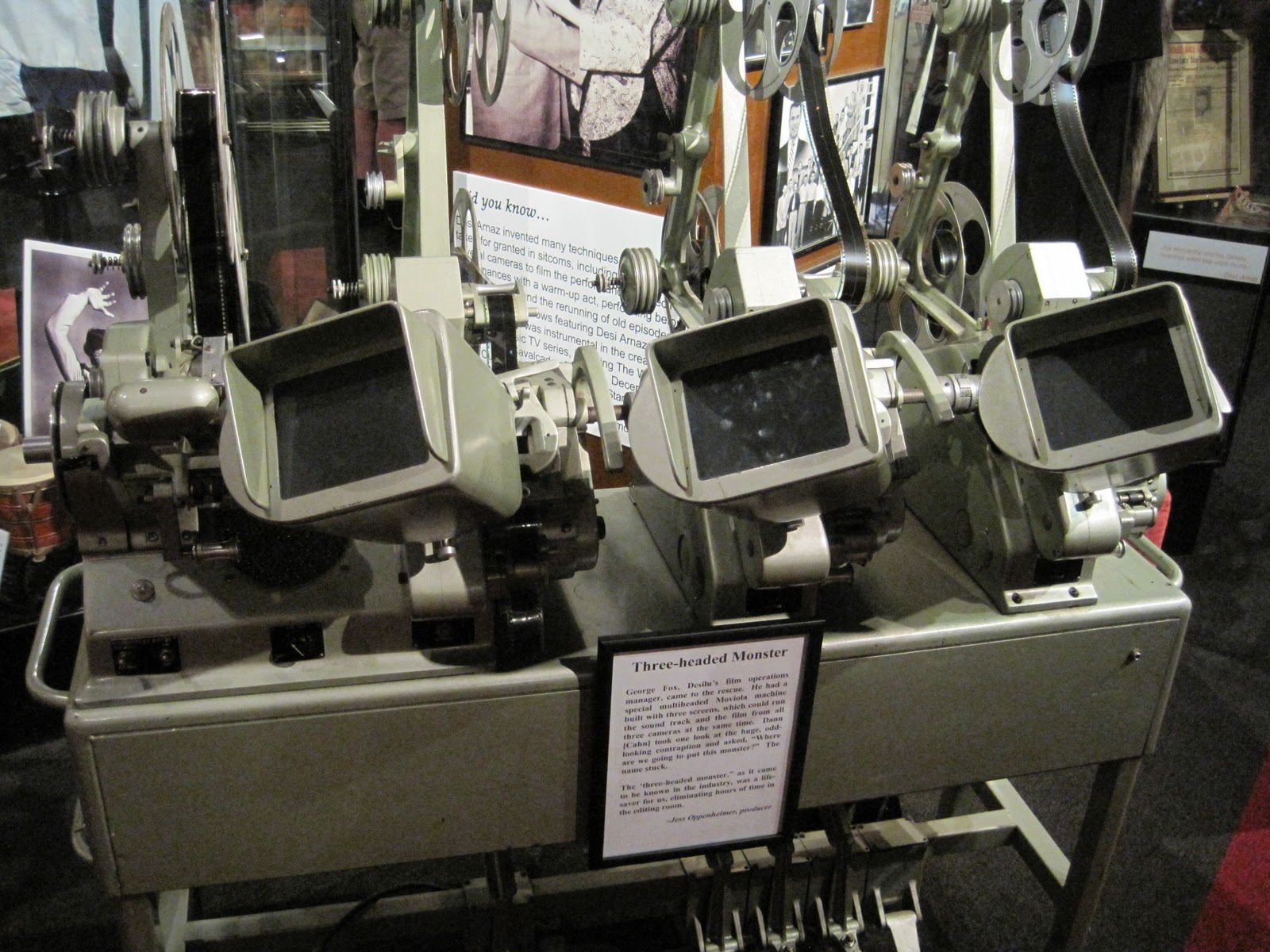
The upper floors are dedicated to rotating displays, which is what makes the museum worthy of multiple visits. When I was there early this September, I lucked out in being able to witness the "Lucille Ball at 100, I Love Lucy at 60" display. In addition to several of the awards that the lovable Lucy won over the years, various props, costumes, and personal dresses she wore to awards shows were present. One of my favorite features was the famous "three-headed monster," which was an innovative piece of equipment used to film what is now considered the first official sitcom. Much attention was equally paid to Desi Arnaz, Vivian Vance, and William Frawley. As a Gustav Klimt fan, I was also appreciative of the "Portrait of Emilie Floge" re-creation with Lucy standing in for Emilie (right).


I Love Lucy's "Three-headed Monster."


And finally, the "piece de resistance" was the top level, devoted to one of my all time favorites, Jean Harlow. Another hundred year tribute, this exhibit proved that the sweet and gorgeous Jean continues to shine so many years after her death.  Much like the Lucy display, there were several dresses to view, as well as enlarged photos of the glamour vixen (in youthful days, left), and personal letters and documents on display. Seeing first-hand the correspondence and penmanship of this silver screen goddess was quite moving, especially when perusing cute notes to friends and colleagues. As big as she became, Jean clearly always remained down to earth and loyal to her pals. Another object worth mentioning was the movie star mural that husband Paul Bern apparently commissioned for their short-lived home together on Benedict Canyon. It depicts a fictional, ancient banquet scene with Jean at center table and other actresses like Joan Crawford and Norma Shearer in attendance. It was quite decadent and unexpected. By far, the most impressive was her personal Packard on display. I don't know much about automobiles, but in this case it was love at first sight. Jean definitely had taste.


Jean's 1932 Phaeton Packard. Yum.


In the back on this same floor, more space was dedicated to other historical mementos, including a roulette table from the infamous Pickfair, gowns worn by Mae West, Greta Garbo, and Clara Bow, and Pee Wee Herman's bicycle. I wish I had had more time to really peruse everything with great scrutiny, but I literally would have had to spend hours there to do so. All in all, it was a great experience with some truly jaw-dropping exhibits and unexpected charms. The downside was that in appearance the museum was a bit cluttered, but I could hardly blame them with all of the artifacts they have to jam into one place. It's still worth a visit to those truly interested in Hollywood history and the preservation of its favorite players. I will definitely be going back when a new display comes to town. 


The much beloved Roddy MacDowell's powder room, complete 
with friends' pictures and autographs.


To visit the The Hollywood Museum: 
1660 N. Highland Avenue
Hollywood, CA 90028
323-464-7776
$15 for Adults
Open 10am-5pm Wed-Sun.

HOT SPOTS in CA: The Hollywood Museum


Ginger Rogers: the face that launched a thousand woos. 
Just ask Burgess Meredith...

During the Hollywood hey-day, Ginger Rogers was one of the silver screen gals whom the men of America considered a dream come true. One thing that set her apart from her contemporaries was her approachability. As flirty and sassy as she was, her sexiness had a cuteness to it that made her both desirable and obtainable. She was the gorgeous girl-next-door who danced her way onto the silver screen and sang her way into men's hearts. The proof of her effect on the opposite sex could be seen early in her career. In addition to garnering a great amount of fan attention, her co-stars and co-workers often found themselves mooning over her. While working on the Broadway hit musical "Girl Crazy" in 1930, her scene partner Allen Kearns revealed his smitten condition before a live audience. During a scene together, Allen was to say to Ginger's character (Molly Gray), "Molly, I love you," (as seen left). Instead, he blurted out, "Ginger, I love you!"The audience started cracking up, and after a blush, the duo had no choice but to keep the scene going as if nothing had happened. However, the slip-up was so charming that they decided to do it again on purpose for the remaining shows. As a result, when the film version was made at MGM starring Mickey Rooney and Judy Garland, Garland's character became "Ginger," both in honor of the preceding leading lady and the embarrassing romantic blunder that helped endear the show to audiences.

Burgess Meredith can be identified as another one of those pinched by Cupid's arrow in Ginger's presence. He made no secret of his affinity for the beautiful actress during the filming of their mutual project Tom, Dick and Harry (both in the film right) and flirted openly with her. He wanted to "woo" her, as would become blatantly obvious. Their attachment would never become truly romantic and was more of a friendship in which Burgess would poke fun at both Ginger's star persona and her enchanting effect on the opposite sex. As a prank, he started to send her lavish gifts every day on the set. The first was a box of chocolates, or rather a "candy woo," as he called it. The only problem was that the yummies were actually made of paper. He then sent her phony flowers as a "flower woo," fake jewelry ("pearl woo") and a ratty fur coat ("fur woo").  The rest of the cast and crew got very caught up in the hilarity, even going so far as to give Burgess suggestions and pointers on how to attack next. They came up with a "diamond woo" and a "car woo"-- the former involved an enormous fake gem and the latter a broken down Model-T Ford. Eventually, the gag got old and Burgess wore himself out. The two laughingly established an armistice and enjoyed the rest of the shoot. Ginger would always look back on this film fondly because of Burgess, whose shenanigans earned him a special place in her heart. In that respect at least, the wooing worked.

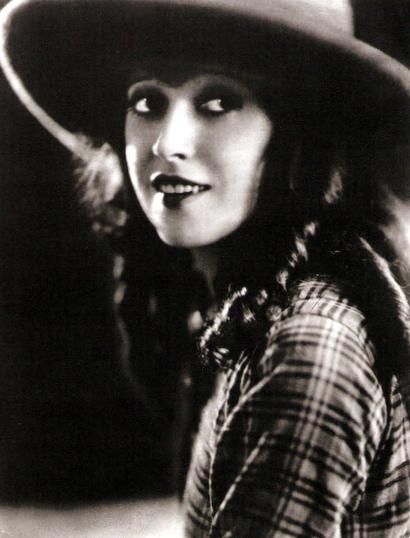
Speaking of pranks, it wasn't always the gents having fun at the ladies' expense. Sometimes, the girls got to have a little revenge as well. Hollywood's earliest Comedienne Fatale was Mabel Normand, whose carefree and boisterous humor made her a popular girl with friends and fans alike (see beauty, left). Part of her charm lied in her ability to lighten the mood when others were taking life too seriously. Sam Goldwyn would learn this when the gorgeous pip, unbeknown to him, was following him around  making faces while he lectured a film crew. Upon discovery, the perturbed Sam couldn't stay mad at her long. This was not just because he was in love with her like every other guy on the lot, but because no one could seem to stay mad at Mabel. Not even Ben Turpin, who had good reason. While filming one particular scene, Ben was to do a bit with a live bear, which terrified him. In the days before computer generated effects, actors had to duel with live animals all the time, and this kind of authenticity scared the bejeezus out of the cross-eyed clown. As such, he insisted that a stuffed bear be used instead. This was a logical request, but Mabel-- who had done her share of animal stunt work-- decided to have a little fun at Ben's expense. Ben crawled into bed beside the fake bear and, just to be sure it was phony, stuck one of Louis Fazenda's hat pins in it. It laid still, so Ben relaxed. Little did he know that Mabel too was in that bed with him, buried beneath the stuffed mammal. No sooner had the camera started rolling , then Mabel moved the bear's arms around Ben, who jumped up in fear and shot out of frame! The moment was so hilarious that it was used in the final print. Mabel thought it was a gas. After all, if a little lady like her could go mono e mono with a lion (in The Extra Girl), then a grown man like Ben could be teased a little about his lack of carnivore courage.


Ben Turpin, armed and ready for Mabel. (I wonder if she's the
 reason he went cross-eyed in the first place)?

Sid Grauman was known for two things in Hollywood: being the greatest showman in the motion-picture business and being the grandest prankster. As lush and extravagant as his movie palaces were-- like the Egyptian and the Chinese theaters in Hollywood-- so too were his gags. One of his favorite marks, and every one else's apparently, was again Sam Goldwyn. The uptight, no-nonsense businessman clearly needed to be taken down a peg or two. Since Sam was an early movie mogul, it was easy for him to find young women willing to go out and enjoy the town with him, and he certainly could have his pick of the prettiest, eagerest ingenues around. Thus, Sid decided to enlist the help of his pal and fellow funny man, Charles Chaplin (both pals right), to teach the egomaniac a bit of a lesson. Charlie offered to set Sam up on a date with a gorgeous girl: "And I mean gorgeous, Sam. You won't find another like her!" Sam, to no surprise, agreed to the blind date, and nearly went blind himself when he found himself sitting across from Sid... In drag. (Pause for spastic laughter as Chaplin grabs his side and hits the floor howling). Another kindly cruel joke was played on friend Ernst Lubitsch, whom Sid knew for a fact had a fear of flying. One day, when Sid caught wind that Ernst was about to (reluctantly) take to the air, he concocted another scheme. After the plane had taken off, he paid two actors dressed as pilots to run from the cockpit and exclaim, "I don't know about you, but I'm getting outta here!" They then jumped from the plane (with parachutes one hopes) leaving a shaking Ernst in their wake. Luckily, there were still authentic pilots flying the plane, and Ernst made it home safe, where he most certainly gave Sid a swift kick in the behind.

Gloria Swanson's hands are immortalized at Grauman's Chinese 
Theater with the help of pal Sid.

Not all of these guffaw-inducing moments were purposeful, however. Sometimes, in fact, certain people were not even aware that they were the butt of the joke. Take Gary Cooper, for example. Coop certainly had his charms and could throw out a dirty limerick or two, but he wasn't really known for his side-splitters. Nonetheless, he could be accidentally entertaining from time to time. Just ask neighbor Veronica Lake. Ronni (right in Ramrod) had taken to Coop, since he was a salt of the earth kind of guy and not one of those stuck-up, pretentious types who so annoyed her. Thus, when she would see him passing by atop his horse in the hills near her home, it would always bring a friendly smile to her face... and a bit of a chuckle. See, Coop had a habit of going for midnight rides when he couldn't fall asleep, especially on Friday evenings. So, he'd climb on his horse and ride a pace, only to  finally conk out in the saddle. The first time Ronni saw his snoring, slumped form ambling by, she probably cocked that iconic eyebrow with a "What the...?" But she got used to it. She was more worried when she didn't see Coop's horse-aided somnambulism than when she did. "No need to wave. Coop's just sleep-riding again. Saturday morning, and all's well!"


Coop on his horse and much more alert.

NOW, THAT'S FUNNY: Part VI

Carole Landis, poised for laughs.


Carole Landis's fun-loving attitude made her an eager participant in many a good-natured joke or game. A warm person, her mere presence seemed to flip the happy switch and put people in a better mood. This came in handy most particularly when she started entertaining the troops during WWII. Her heart went out to the battling soldiers, and she would do anything to give them a little peace and joy in the midst of the chaos that they daily faced. And I mean anything... During the war, radio became a useful outlet for the boys fighting abroad, and a steady stream of broadcasts gave them comforting reminders of home. One particular show, Command Performance, was based upon this concept. It took random requests from the boys and put them into action, making the oddest desires come true. Hopefuls called in with strange petitions, asking for various sound mementos from home or-- more daringly-- celebrity performances. On one interesting occassion, a huge Carole fan asked for very small favor. All he wanted was to listen to her "sigh." Carole must have gotten a good chuckle out of such an odd inquiry, but she gamely agreed to do it. So, on June 14, 1942, Carole stood in front of the microphone and softly proclaimed to soldiers all over the world, "Ahhhhhhhh...." It was a sensation and one of the best remembered moments of the show, as well as one which earned the most requests for replay.


The next jest is too tied to Carole, but there is debate over whether it was she who indeed committed the whimsy or her contemporary Lana Turner (left). In either case, one of these two ladies was again entertaining the soldiers in wartime and dancing with one fellow in particular-- who found his gaze continually traveling downward to the damsel's low-cut neckline. The soldier then humorously asked if the plunging cut was supposed to symbolize "V for Victory?" Not to be outdone, the lady in question quipped back, "Yes, but the bundles aren't for Britain!" Carole would later attribute the punchline to Lana, but some argued that she had in fact said it herself. I guess we'll never know. Both ladies were certainly capable of that kind of brazenly, silly stunt.


Beyond the Forest is most memorable for being the line in which Bette Davis uttered the eternal quote: "What a dump." However, there is actually a rather funny story involving another quote from the film. See, Bette didn't want to do the film in the first place. She thought both the story and the character were beneath her. Having constantly battled with studio head Jack Warner in the past, her fierce, stubborn streak was old news at this point. It was clear that both Bette and Warner Brothers were growing tired of each other. She fought, begged, and pleaded to get out of the role, even offering up casting suggestions-- she thought Virginia Mayo was better suited to play Rosa Moline, which was probably a back-handed compliment at the actress, who was more notorious for playing sexy, gangsters' molls. In the end, Bette's tenacity did not get her out of the movie, but it did end her contract. She threatened to walk off the picture, which was only half finished, thus inducing an ultimatum from Warners: if she finished the picture, she would be free from her home studio. She agreed. Finally, liberated after eighteen years, Bette was ecstatic... Until she learned that she had to return to do some voice over on a badly recorded scene. Glumly, she trudged back to say her last line at WB: "If I don't get out of here, I'll die." (See iconic moment, right).


Gary Cooper (left) was a quiet sort of guy, but that was part of his charm. Where most celebrity males of the time, and in fact today, walked with a confident swagger, he more gracefully strolled. Where many were loud and boastful, throwing their masculine weight around, Gary was quiet and soft spoken. Many a person, particularly women, spent a great deal of time trying to figure out what was going on inside that pretty, silent head of his, and certain gals like Carole Lombard threw up their hands in defeat after trying to figure him out. In the end, Carole preferred the brashness of Gable, thinking Gary was, well, boring. However, this was not so. Coop too had a great sense of fun and naughtiness, as Rita Hayworth and Veronica Lake would witness first hand... when they went on a bender together. This unlikely trio of shy outsiders banded together one fateful night while in Chicago on a War Bond tour. Determined to forget their stresses and throw caution to the wind, they soon found themselves at a strip joint watching the current female attraction on stage.


Gary, despite his bashful demeanor, was one of the notorious Hollywood "ladykillers," so it came as no surprise to Ronni and Rita when a girl plopped down next to him and started a conversation. Gary listened sympathetically, despite being schnockered, as this young woman explained that it was her sister who was dancing on stage and, "Oh dear, isn't it a horrible thing?" Veronica and Rita marvelled at the way Coop was able to draw the unsuspecting girl to him like a moth to a flame; how a complete stranger found herself babbling her innermost sorrows as he at least pretended to listen. He had such a wooing, calming effect. Eventually, having unburdened her conflicted heart, the girl made a drunken exit, leaving her stripping sister and famous cohorts behind, though she was probably not even aware to whom she had just been speaking. Feeling a bit guilty after this revelatory conversation, the three friends quieted their consciences by becoming equally inebriated and ambling down to another strip joint. And just who do you think should be dancing center stage? The very same girl who had just been mourning her sister's sad profession!  As eyes bulged and mouths opened, one can almost imagine Rita and Veronica looking at a surprised Gary and cackling at the twist of fate. The joke, it seemed, was on them! The girl recognized the coterie and humorously gave Gary a great deal of attention, for which he provided a generous tip. As they departed from their night of debauchery, the man of few words had, as usual, little to say. Smirking and shaking his head, he let it go with a: "Well, I'll be damned." (Gary and Rita reunite more soberly during They Came to Cordura).


Vicente Minelli, Judy Garland, and Kate Hepburn chit chat
on the set of Undercurrent.


After the disastrous shoot on Summer Stock, Judy Garland found herself permanently severed from her home studio MGM, which was bittersweet. Happy to be free, yet anxious without a home, her depression was only intensified by her deteriorating marriage to the homosexual Vicente Minelli. At the end of her tether, Judy disappeared into the bathroom and used some broken glass to slash her own throat. This suicide attempt was no laughing matter, of course, but it was typical of Judy, whose injuries were far from fatal. Mostly, she was crying for help, attention, and sympathy-- publicly proclaiming herself the victim of MGM's ruthless brutality. The message was received, and Louis B. Mayer, in a panic about what the negative publicity could do to his studio, sent for Hollywood's immovable pillar of strength, Katharine Hepburn, for help. She agreed to go talk to Judy and hopefully coax her out of the black hole into which she'd fallen. Kate arrived at Judy's home and was barraged by photographers, whom she told in no uncertain terms that if they took her picture, they would be punched in the face. Needless to say, the shutters stopped. In her typical, New England drawl, she then burst into Judy's room with a series of reprimands and supportive anecdotes. "Oh deah, you rally are in a bad way, ahn't you?" Kate offered Judy room and board at her place, where the patient could regain her strength and recuperate. Judy, grateful for the offer, was too terrified to accept. "Relaxing" with Kate surely would include swimming, jogging, and various other tough love rejuvenation tactics. Judy preferred to mope and enjoy the pitiful windfall of sympathy. Yet, Judy loved and respected Kate and felt truly victorious that one of Hollywood's biggest angels had been sent to help her. However, she was soon offered another consoling shoulder, which she did not find as appealing. During prayer at church, Jane Russell believed that she had been sent a divine message to reach out to Judy in her plight. So, she made a telephone call. Judy answered, at which point Jane went into Psalm 23: "The Lord is my shepherd..." Judy, who-- despite evidence to the contrary-- was in no mood to face her maker, quickly and embarrassingly interrupted with a "Thank you" and abruptly hung up. Perhaps at her next prayer session Jane offered up an "Our Father, return to sender."

Talk about "V for Victory..." Jane in her Sunday best.

NOW, THAT'S FUNNY: Part V

Has Anybody Seen... James Dean???


It is commonly accepted that James Dean appeared in only three films. Accepted, but untrue. One of James's first big breaks came when he was featured in the film Has Anybody Seen My Gal (left)? A bit part, his big screen moment amounted to him ordering a sundae from Charles Coburn. Hardly groundbreaking... In fact, after Dean's death, the film's star, Piper Laurie, had no idea that she had even been in a film with the late, great James Dean until it was pointed out to her. However, the film's other star, Rock Hudson, would remember Dean when they were cast together once more in Giant. Rock was not amused at the reunion, and (despite gossip to the contrary), he and James did not get along. Mutually threatened by the other's presence, Rock and James rarely conversed and constantly competed for the attention of Elizabeth Taylor, a friend to both. Perhaps it was a simple clash of egos; perhaps the more congenial Rock simply couldn't get around James's idiosyncratic behavior. But, perhaps Rock was a little jealous of the fact that the runt, bit player he once towered over had grown exponentially in popularity since Has Anybody Seen My Gal, and was now stealing scenes from him to boot!


James also did a lot of television work, which isn't popularly recalled. His television debut came via an Easter special-- "The Family Theater: Hill Number One" (right). In it, he played John the Apostle. His first professional part on film and he was cast opposite both struggling actors and seasoned thespians alike, including Raymond Burr, Ruth Hussey, Roddy McDowall, Gene Lockhart, and Leif Erickson. A struggling nobody at the time, his fame would surpass them all within 4 years when he made Elia Kazan's classic East of Eden. But, he did get some notice at the time. His first foray into film acting also spawned his first small fan club, whose meetings he gladly attended! After all, the boy loved attention...


After her days in the Hollywood limelight had faded, which was just fine with her, Jean Arthur (left) had some intermittent bouts teaching dramatics. One gig found her at Vassar in the spring of 1968 as co-instructor with Clint Atkinson. The odd-ball lady's teaching skills were often reported as sub-par, but her students normally fell under her spell nonetheless-- that is, after they realized who she was. In the days before Cable, DVDs, and Netflix, becoming familiar with celebrities of the glory days was not as easy as it is in present society. In fact, it seemed at times that Jean herself had forgotten her stature. The once famous screwball queen of Mr. Deeds Goes to Town no longer saw herself as anyone of import, and she  always remained humbled by other performers. Never recognizing her own talents, it wasn't uncommon for her to become tongue tied around someone she found truly gifted. For example, she once went to one of the plays Atkinson directed, "Miss Julie," and was so blown away by the lead female's performance that she forgot her own status and gushed: "It was just like watching a movie star!" It was a prophetic moment, for the young drama major Meryl Streep went onto a very healthy and groundbreaking cinematic career.


Meryl, as she appeared in her Vassar days.


Jean wasn't the only one responsible for accidentally spotting one of Hollywood's predestined diamonds in the rough. In 1944, actor Ronald Reagan (right in Knute Rockne All American) was already dabbling in politics and matters of state when he was made a Lieutenant of the army's First Motion Picture Unit. Coincidentally, he had the idea to boost the war effort by sending photographers out to take pictures of women doing their part for battle. As such, photographer Corporal David Conover was sent to Radioplane at the Glendale Metropolitan Airport to photograph pretty girls hard at work a la Rosie the Riveter. Conover was particularly taken with one beauty, whom his camera truly seemed to favor. After the pictures were printed, it was clear that the rest of America favored her too. Before she knew it, she was working steadily as a model for Emmeline Snively. Soon after changing her name from Norma Jeane Dougherty to Marilyn Monroe, and getting a divorce, she would work her tail off in the film biz and become a famous movie star. I wonder if she ever thanked ol' Ron for the boost?


This Norma Jeane had a long way to go before
she became Marilyn Monroe.


Harpo Marx adored children. The product of a large family himself, it was only natural that the Marx boy with the biggest heart would want a huge brood of his own. He and wife Susan Fleming would eventually adopt four children, all of whom worshipped their Pops, who was more of a child than they were most of the time. George Burns, a good friend, was so moved by Harpo's paternal penchants that he asked why he felt the need to have so many kids? Harpo responded-- with actual speech-- that his dream was to leave the house in the morning and have a smiling face waving to him from every window. I guess he was one kid short, because when shooting Horse Feathers in 1932, he became completely enchanted with a young actress who was ambling about the set with her mother. Though a very pretty little girl, Harpo mostly admired her spunk and unique talent, particularly because it was presented in such a small package. He offered to adopt the sweet pipsqueak for $50,000-- probably in jest, but with Harpo you never know. Shirley Temple decline the offer and stayed with her biological parents. Whoda thunkit? She could have been Shirley Marx-- part of the act!  But then, she was probably too mature for the rest of that gang.


Shirley feeds her belly, while Harpo feeds her ego.


There's no business like show business and no business so tough. It certainly helps to have a few people on your side, especially when it's family. However, the delightful singing trio of The Andrews Sisters-- Maxine, Patty, and Laverne (right)-- still had to overcome the same hurdles, despite having each other to lean on. Their one-two-three punch wasn't as original a gimmick as they'd hoped either. When staying in Chicago, it just so happened that another triplet of singing sisters were staying at the same hotel. At first, despite the age difference between the two sets, there was a little rivalry. Maxine used to rush to the building's rehearsal space in the morning to secure it for her sisters and lock the other intruders out. However, the ice was broken when the youngest member of the other group, nicknamed "Babe," asked to listen to the Andrews rehearse. Unable to say "No" to the adorable little girl, the sisters agreed. After singing awhile, they in turn asked Babe to offer up a song. When Frances Gumm opened her mouth and belted out "Bill" like nobody's business, the Andrews girls were left with their mouths hanging open. Maxine was so moved, she cried! Immediately, the  rivalry between the Andrews Sisters and The Gumm Drops disappeared and they became fast friends and allies. The Gumms would soon disband, but Judy Garland's voice had no problem going solo.


The Gumm Drops: Mary Jane, "Jimmie," and Judy.

And finally, in recognition of a recent royal wedding: Powerhouse actresses Olivia De Havilland and Grace Kelly were not formally acquainted in 1955. Divided by a generation gap, Grace was but one of the younger actresses in Hollywood who was taking on roles that would have once gone to diva extraordinaire Olivia. There were no hard feelings. Olivia was happily married to husband number two, Pierre Galante, and excited about her new life in France (happy coupled pictured left). However, she hadn't completely waved goodbye to Hollywood and was still active in the biz. Pierre used this to his advantage when, as movie editor of Paris-Match Magazine, he was looking for a good scoop in the featured Cannes Film Festival article. Knowing that Grace had been wooed to the event, he decided to use the aid of his wife, luckily a fellow actress, to arrange a fantastic story: "Hollywood Princess Grace Kelly meets Prince Rainier III of Monaco!" With Olivia as his co-conspirator, the duo offered to show Grace around Monaco, and "oh, by the way," introduce her to the Prince. Grace, who was actually quite bashful, begrudgingly agreed, and Pierre set up the meeting. However, there were scheduling conflicts, and after both parties finally settled on a decent time, Rainier still kept them waiting while running late from another engagement. Luckily, Olivia was there to keep Grace occupied with conversation. Had she not held her, Grace probably would have shrugged her shoulders and returned to the festival. Luckily, just as Grace was rising to leave, Rainier appeared, and offered her a tour of the palace, which she had already seen but out of kindness perused again. Afterward, Grace mildly reported to Olivia: "Well, he's very charming." Mission accomplished. The captured pictures were a sensation and the article was a hit. Little did Olivia and Pierre know that they had not only scored a scoop but had too shot the arrow of love.

Kate and William who??? Grace and Prince Rainier are wed just shy
of a year after their first meeting, thanks to O de H.

BITS OF COINCIDENCE: Part Five

The time has come for some more cinematic "What ifs." Hope you like the latest lot:


Judy Garland, wondering where her latest part went...


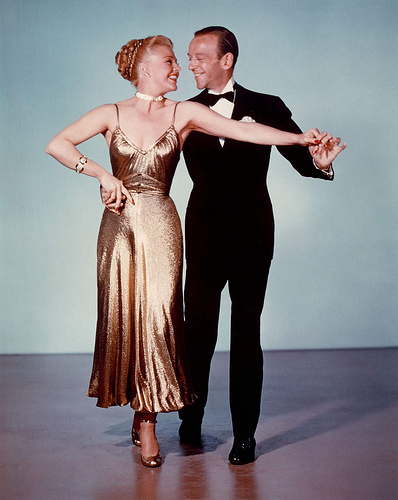
Toward the end of Judy Garland's MGM career, there were many roles that were snatched out from under her. Or rather, several roles that she let slip away. As her disenchantment with the studio's slave-driving and her own personal and substance abuse problems increased, her work became less consistent-- in quantity if not in quality. Judy missed out on an opportunity to re-team with Fred Astaire in The Barkleys of Broadway. After their success in the triumphant Easter Parade, MGM was looking to put the duo back together again, a gig that both stars were looking forward to, since they got along swimmingly-- or should I say dancingly? (Interestingly, Gene Kelly had originally been slated to star in Parade, but his injured ankle called Astaire out of retirement). Sadly, a reunion for Fred and Judy was too not to be. Judy was still worn out from the previous film-- pale and gaunt, she lacked the energy to fulfill her obligations. In the end, it was Ginger Rogers who was called upon to take back her place as Fred's most famous waltzing partner. This would be the first time the two had appeared together since 1939's The Story of Vernon and Irene Castle. A decade later, they were still a sight to behold (see left). It would be the last movie the famous pair made together, ending an 10 picture winning streak.


In 1949, Judy was also slated to star in Annie Get Your Gun, however there were several strikes working against her. She had recently and admittedly separated from her husband, Vincente Minnelli, and the realization of his true sexual tendencies was a crushing blow to her feelings of security as a woman. In addition, the film's director was to be Busby Berkeley, an arch nemesis who had driven Judy to the brink of collapse in her earlier, childhood roles. Judy too disliked the frumpy wardrobe (right), which further inhibited her already enormous physical insecurity. Judy's response was to arrive late or not at all. In addition, her health was poor as a result of the temporary electroshock therapy she was undergoing. As her weight dropped and her hair began to fall out, her one coup was having Berkeley replaced with her friend Chuck Walters, but even he couldn't save Judy. She was offered an ultimatum by the studio-- show up on time, or you're fired! Judy left in a huff and Betty Hutton, everyone's favorite, loud-mouth mug, stepped into Annie's stirrups. It remains her most famous role.


Betty Hutton, guns blazin'!


Errol Flynn is remembered as America's Favorite Swashbuckler. It seems that this Tasmanian Devil was destined for fame, for the beginning of his career was guided by a power greater than himself. His big breakthrough role as Peter Blood in Captain Blood was a phenomenon (left with Olivia De Havilland). Jack Warner took a big gamble in allowing the unknown Flynn to be cast in Michael Curtiz's epic pirate adventure. Originally, Robert Donat was slated to star as the doctor-turned-seafaring hero. After he dropped out due to illness, Leslie Howard, Ronald Coleman, and Fredric March were also considered. 22 other actors in total were given screen tests for the role.  It was Errol's own wife, Lili Damita (a bigger star at the time), who encouraged Curtiz (her ex-husband!) to cast him. He did, and the gamble paid off. The film was a box-office bonanza, and Errol Flynn was a star! Lili was in tears at the premiere, not out of joy but out of despair. She knew that Errol's rising star would mean the end of their tempestuous marriage. She was right.


This didn't mean everything came easily to him in the casting world. The role with which he is most synonymous, Robin Hood, was almost one he never got to play. It appeared for a time that James Cagney (right) was to be the eternal man in tights. However, due to professional disagreements, he walked right out of Nottingham, leaving the way free and clear for another leading man. Again, Errol was chosen, and he will forever be remembered as that delicious cad in green, fending off foes in Sherwood Forest. As one of Warner Bros. greatest films, it is impossible to imagine anyone else wooing Olivia De Havilland's Maid Marian. Besides, Cagney looked better with a gun than a bow and arrow... Errol's good friend David Niven was also supposed to step in as Will Scarlett, but he couldn't be torn away from his vacation in England, so Patric Knowles took the job.


Patric and Errol relax between takes in Sherwood.


William Holden's struggle for and with the role of Joe Bonaparte in Golden Boy is a story many love telling. The "rich kid" had been studying chemistry but had always had a penchant for the dramatics. He was on a high when cast in the role of a lifetime in Golden boy, but this unknown was immediately humbled when he found that he quite simply couldn't act under pressure. Bumbling around the set, flubbing his lines, and looking mighty awkward, director Rouben Mamoulian was shaking his head wondering why he had cast him in the first place. John Garfield too must have been pondering the same question, since he was the actor that author Clifford Odets had originally penned the role for when it was to go up on the New York stage. At the time, The Group Theatre chose Luther Adler to take on the role instead. In response, John quit the group and went to Hollywood. When word came that the play was to become a movie, John thought his time had finally come to take on the role that he had always wanted to play. This time the part went to the unknown Holden. After some help from Barbara Stanwyck, Bill got his grip on himself and the role of a lifetime and had his day in the sun as the Golden Boy (left). Garfield was ok, though. By this time he was a well on his way to becoming a big star too, having performed in the very popular Four Daughters the year before.


John Garfield would get to play a boxer later 
in Body and Soul. He would also play
a violinist opposite Joan Crawford
in Humoresque.


In struggling to choose the greatest romantic comedy of all time, I go back and forth between two films: The More the Merrier and Roman Holiday. It is hard to choose the greatest of them all, but often I veer toward the latter. The star-making performance of Audrey Hepburn, the amiable dignity of Gregory Peck, the fun and adventure of a Princess's day as a normal girl, and, of course, the heartbreaking end when she must return to a life of discipline and reserve. All of these elements came together so beautifully that it is impossible to imagine the film any other way. But, it very nearly was an entirely different film, one which was to star Cary Grant and Elizabeth Taylor. Oy! Though both of these performers were fantastic, the lighthearted innocence of the film would have been lost. Grant is both too sophisticated and too comically playful to take on the newspaperman next-door role that Peck created so gracefully, and Liz had too much maturity and sensuality to carry off the delicate and naive enchantment that Audrey delivered. Thus, the one-two punch of Greg and Aud' was the right combo, creating the profound chemistry needed to illicit love in 24 hours. Heart-- the most crucial element to any romance-- is very poignantly felt because of both actors' performances, and when Peck walks away from that empty silent hall at the end, it is completely clear just what he is leaving behind-- a love that could have been and a cinematic legacy.


Ahhh, movie heaven: Audrey and Greg 
in Roman Holiday.

CAST AWAYS: Part VI