Download Games

Recent Posts

Showing posts with label Marilyn Monroe. Show all posts


Marlene, as an extreme personality- here in Blonde Venus-- 
was practically begging to be caricatured.


The struggle for fame and celebrity in Hollywood is a continual one. Even when someone has a few films under his belt and has a somewhat familiar face, the work that goes into maintaining his star status and position is more difficult than the public can ever imagine. Therefore, it naturally follows that no celeb is ever comfortable on his pedestal, which at any moment may topple. If he takes a break to blink, his moment may be over forever. From the outside, it looks easy, but to the one swimming upstream, it is impossible to ever utter the words, "I made it!" There is one tell-tale sign, however, to intimate that one has evolved past the cluster of "working actors" to the realm of bona fide "star," or perhaps even to the land of "legend." If you're popular enough to be mocked, heavily referenced, or flat-out imitated, you may have finally surmounted the curve. Today's stars can look forward to a lambast on "SNL" or "South Park," but before the days of television, there were only movies. Here are some stars who were big enough to be [mocked] in pictures.


The most obvious example is the hilarious haranguing of this month's muse, Marlene Dietrich, by one of the Queens of Comedy, Madeline Kahn, in Blazing Saddles (left). Mel Brooks's lampoon of the Western genre was derived from many classic films, including Dodge City, but the reference to Destry Rides Again never becomes more obvious than when Madeline takes the stage as Lili Von Schtupp. "Lili," one assumes, is a reference to one of Marlene's classic songs, "Lili Marleen" and "Schtupp" to... well, that's one Yiddish word everyone understands, I think. Madeline's every mannerism as Lili is clearly taken from the assertively sexual "Frenchy" that Marlene portrayed in Destry, and Madeline's impression of Marlene's accented speech is too humorously exaggerated and aped: "Oh, a wed wose..." Nothing is so spectacular as her rendition of the original song, "I'm So Tired." Her comedic expertise makes the performance more than a hammy imitation, it is genius. With Gene Wilder's so-quick-you'll-miss-it gun draw and Cleavon Little's confident and sly portrayal of the west's first black sheriff, there are few moments for one to draw breaths between laughs during the film, but it is Madeline's Marlene that takes the cake. As Marlene was still alive when the film was released, one wonders at her reaction, if she even saw it. Another screen beauty, Hedy Lamarr, gets a "shout out" as well, since Harvey Korman's character is named "Hedley Lamar." However, Hedy was not flattered, and sued Mel Brooks for what she considered to be the gross use of her name.


Another great parody comes via Carole Lombard in The Princess Comes Across. This screwball comedy is a mish-mash of mystery, murder, and maritime love. Carole portrays actress wannabe Wanda Nash who, in order to conceal her identity, pretends to be a Swedish princess (Olga) on her cruise to America, resulting in a lengthy, pitch-perfect send up of none other than Greta Garbo. From the moment Carole appears as Olga, beautiful, glamorous, and aloof, there is no question as to whom she is imitating. Her distant, irritated poise and uber-European accent-- "Dis is verry annoying..."-- draws an instant comparison to the eternal, gorgeous hermit who only wanted to "be alone." Of course, Carole is at her best when the mask comes off and her abrupt Brooklyn character has time to rant and fuss about the stress of maintaining her hidden identity and dealing with all those dead bodies that keep piling up on deck. A romance too ensues between Olga/Wanda and bandleader King Mantell, portrayed by a constant Carole co-star, (there's an alliteration for ya'), Fred MacMurray. Greta's very anti-social, dramatic, enigmatic, and slightly egotistical persona made her an easy person to duplicate, but through Carole's comedic expertise the likeness is exquisite (see right). With that special Carole stamp, we have a character who is part elegant and part kooky. For one great Hollywood screen goddess to portray another is superb, and the divide between the easy-going, deviant manner of Carole versus the otherworldy iciness of Garbo is both clear and divine.


In the film Monkey Business, Groucho, Chico, Zeppo, and Harpo Marx all used their singing skills and slight physical resemblance to Maurice Chevalier to comic effect. On yet another seafaring voyage, the four brothers are stow-aways (see left) who cause the usual amount of Marxian chaos and girl-chasing on their way to America. Groucho woos Thelma Todd, Zeppo befriends a pretty passenger, and Harpo and Chico step in as the vessel's very under-qualified barbers, all while evading capture and the anger of one very miffed gangster. After they make it across the Atlantic, they are left in a quandary: without passports, they will  be unable to disembark. Luckily, they swipe an ID from a passenger who coincidentally happens to be the Maurice Chevalier. One by one, they take turns offering the passport to the authorities, who of course doubt their identity. Forced to prove themselves as the French crooner and Lothario, they each sing the Chevalier classic, "You Brought a New Kind of Love to Me," only to be denied access to American soil for their very poor impersonations. Ironically, the deliberately mute Harpo comes closest to victory, as he lip syncs the verses to a recording strapped on his back, but a slight malfunction botches his liberation as well. However, as in all things Marx, all's well that ends crazily, and hats off to Maurice for the honorary mention.

A very direct homage was paid to everyone's favorite ghoul, Boris Karloff (right), as well. "Arsenic and Old Lace" was a play penned by Joseph Kesselring in the early '40s. The plot revolved around two lovable old ladies who perform the benevolent service of murdering old, lonely men past their prime-- somewhat akin to the way the Eskimos set their elder community members adrift, or so I've heard. Their plot is discovered by their nephew, Mortimer, who is in the midst of possible matrimony. As if the shock of blood on his sweet aunties' hands isn't enough, he too has to combat an uncle who thinks he's Teddy Roosevelt, and his brother Jonathan, another murdering criminal, who returns home with a new face to hide his identity. Unfortunately, the doctor who performed the plastic surgery was intoxicated during the operation, and Jonathan came out looking like... Boris Karloff. Of all the horrifying faces to be trapped with! Audiences totally responded to the joke, which obviously runs throughout the entire play. Of course, the real clincher was that Boris Karloff was playing the role of Jonathan himself! Sadly, for various contractual reasons, Boris was unable to participate in the film version of 1944, which starred Cary Grant as Mortimer and the capable Raymond Massey stepping in as the facially mutated Jonathan. Since the play and the film made Boris even more immortal than he already was, I suppose he had the last laugh.


Sometimes, in the quest for stardom, one starlet makes it over another by a hair. This was definitely the case with Veronica Lake, whose iconic 'do (left) made her a sensation in her own day and keeps her a legend in ours. Ronni's hair was her "thing," just like Marlene was known for her gams and Jimmy Durante was known for his schnoz. Articles were written about her mop's hygienic upkeep and daily grooming regimen, public service announcements for safety were made with her hair used as a prop, and countless jokes were made at her expense. Possessing a good sense of humor, Ronni took the jests in kind. After all, they only helped to boost her appeal. If it took her mane to keep her in the mainstream, then so be it. Yet another reference to her famous tresses was made in Billy Wilder's first directorial effort, The Major and the Minor. Ginger Rogers, in yet another case of hidden identity, runs into trouble when she cannot afford an adult train ticket, which causes her to pose as an adolescent for cheaper fare. Unfortunately, she gets mixed up with, and sexually attracted to, fellow traveler Ray Milland while in disguise and winds up at his military academy still portraying a precocious pre-teen. Forced to attend a junior dance, she encounters a room full of young women who "all think they're Veronica Lake": cue camera pan to a row of seated girls with their faces half-covered in hair. It is a priceless guffaw that is typical of Wilder's comedies. Not only was it a fantastic gag at the time, but this small, hilarious reference also places it firmly in its timeline when modern viewers watch it today.


Speaking of sexpots... Marilyn Monroe topped them all (right). Her star power would be exemplified ad nauseum during her life, as it continues to be in her death, but interestingly it too was brought to life via Jack Lemmon. The two had worked together in the film Some Like It Hot, and while the consummately professional Jack was a little put off by Marilyn's at times erratic behavior, he could not deny her inexplicable charisma and warmth, which in the end gave him a soft spot for her. A year later, now as one of Billy Wilder's favorite actors, Jack was given the leading role in The Apartment opposite Shirley MacLaine. Acclaimed for its comedy and sympathy, it in a way reunited Jack with his conflicted friend when one particular scene pays homage to Marilyn-- although, since Billy too worked with Marilyn, this was a way of professionally tipping his hat to her screen power despite their post-Hot feud. Early in the film, Jack's C.C. Baxter is called by work colleague Joe Dobisch (Ray Walston), who is in a frenzy, because he just picked up a girl and has nowhere to take her for a sexual rendezvous. Since Baxter's apartment has become the go-to for cheating spouses, Joe asks for the use of his digs. When Baxter begs off so he can rest, Joe becomes adamant. The girl, he insists, is exceptional: "She looks like Marilyn Monroe!" With that, how can Baxter refuse? He gives up his room so that his work superior can live out every man's fantasy-- or at least as close as a guy like him will ever get. "Marilyn" and "Monroe" were apparantly the secret passwords.


Marilyn co-operated in another public celeb kudos earlier in her career when she starred in How to Marry a Millionaire, however Lauren Bacall rightfully maintains the bulk of the credit. The movie, of course, is about three lovely but struggling young women (Lauren, Marilyn, and Betty Grable) who are Hell-bent and determined to marry well to rich men. In the film, Lauren befriends the elder but always gentlemanly William Powell, who resists her advances due to their May-December age gap, yet later decides to court her in earnest (see left). In doing so, the other two gals question Lauren's choice-- he is old after all. But, Lauren rebuffs their quips by making an example of all of the handsome older men in the world: "I've always liked older men. Look at Roosevelt, look at Churchill. Look at that old fellow what's-his-name in The African Queen. Absolutely crazy about him!" In this case, the crack wasn't just business, it was personal, for in real life Lauren was already married to Queen star Humphrey Bogart-- her senior by nearly 25 years. One imagines he found the cinematic joke hilarious and, of course, appreciated the extra publicity.


Lauren Bacall enjoys a day off with her "old man."

MENTAL MONTAGE: The Sincerest Form of Flattery

Is it true that "the song remains the same" if played to a different tune? You decide whether The Way We Were can still outdo What Might Have Been:


Marlene and John Gilbert take on the town.


Marlene Dietrich is remembered in cinematic history as being a stone cold... fox. Yet, off screen, her character was much softer and more maternal than any of her performances could have relayed. She would only play a mother once, in Blonde Venus, despite the fact that "mom" was her favorite role in her personal life. Her natural inclination to nurture soon enough drew her to none other than fallen angel John Gilbert. When Lewis Milestone alerted her over dinner that his neighbor, the handsome Jack, was out of work, melancholy, and just doors away, Marlene-- who strongly adhered to the "no man left behind" mentality-- marched up to his house and announced, "John Gilbert, I have come to save you." The stunned heartthrob made no dispute. In addition to enjoying a romantic affair, Marlene also vowed to kick-start Jack's stalled career by insisting that he be cast opposite her in Knight without Armour. It would have been something to see these two lovers together on screen. Sadly, Jack passed away on Jan. 9, 1936 before production was started, so Greta Garbo maintains the reputation of his greatest screen lover (both on and off). Marlene was devastated at Jack's passing and lit votive candles beneath his picture in memory for several months afterward. Yet, she did not hold it against the debonair Robert Donat when he later took on the role of A.J. Fothergill in Knight. In fact, Marlene turned her mother instincts on him as well. When he became ill, production threatened to have him replaced. Again, Marlene stepped in and insisted that the film be postponed until its leading man was better, or else she too would walk. The brass took the bait, and after the grateful Robert recuperated, Marlene toasted his return.

Robert Donat plays Marlene's Knight without Armour,
 though in life she was the hero.


Despite her brazen, business savvy ways, Marlene too hit some rough patches. In these times, she was resilient enough to take care of herself, but it was always nice when a helping hand was extended in her direction. Such was the case when it came time to cast Destry Rides Again (left). At this time, Marlene was suffering a dip in popularity, having just been labeled as box-office poison alongside soul sisters Katharine Hepburn, Bette Davis, and Joan Crawford. While she still remained adored by fans, love wasn't money, and she needed a great role to re-establish her box-office clout and fill her always dwindling bank account. Luckily, Joe Pasternak had had his eye on her since her silent film and stage days in Germany. He lobbied for her in Destry, despite the fact that the studio wanted Paulette Goddard. Fortune was on Marlene's side, because Paulette turned out to be "unavailable." Marlene got the role, and her "come back" resulted in a box-office sensation-- one of the many films to make 1939 the eternal year of movies. Befittingly, Marlene and Paulette never really got along, especially after Paulette married Marlene's good friend, writer Erich Maria Remarque. Marlene saw him little after the nuptials, but while Paulette may have gotten her pal, Marlene got her career back.

Paulette Goddard could definitely pull off the femme fatale,
but she was no match for Marlene.

George Burns had been acting in movies for over 45 years by the time he was cast in The Sunshine Boys. Co-starring Walter Matthau (together right), this film was a precursor to the aging frenemy films that Walter and Jack Lemmon would make later, such as Grumpy Old Men. In Sunshine, the two heroes are old-- and I do mean old-- show business partners, whose days in vaudeville made them stars in their own time but leave them forgotten in present day. However, an opportunity to earn some bookoo bucks and regain former glory comes when they are offered a performance on a television special. The reunion is an unwelcome one, as the two curmudgeons can't stand each other. Chaos ensues.  The brilliant comic sparring of George and Walter made the film a surprising hit for a world continually described as youth-centric. George with his dry, crotchety delivery, even won an Academy Award for his performance-- a first for a man of 80. This was a very moving moment in his life, particularly since he was not even slated to star in the film originally. In the beginning, his good friend, the much beloved Jack Benny, was to play Al Lewis, but sadly Benny was in poor health and could not accept the project. After making some initial screen tests with Walter, Benny backed out to rest and hopefully recuperate. Always a gentleman, he recommended his friend George for his abandoned role, which George of course accepted. Not long after, Benny passed away. Thus, when George accepted his long-awaited Oscar, he accepted it not only for himself, but on behalf of his dear, departed friend, without whom he never would have embraced the long-awaited statuette.

George Burns and Jack Benny make beautiful music together.


The Thin Man is a perfect example of the little movie that could. Based upon the mystery novel by Dashiell Hammett, it was given a modest budget by MGM and was ranked during production as a simple B-feature. Always up to the challenge, director W.S. Van Dyke was able to churn out the comedy classic in the allotted two weeks, but even more impressive than his economy was his casting palette. The dynamite combo of William Powell and Myrna Loy as the playfully bickering Nick and Nora Charles (left) remains one for the ages. Though the two had performed together before, in Manhattan Melodrama, their chemistry reached true perfection once they started pulling punches amidst the hilarity of murder and marital discord. Their onscreen relationship was amplified by their offscreen friendship, and a mutual trust and affection would bring theaters-goers their first glimpse of a modern marriage: oozing sarcasm, often drunken, and forever in love. The pairing too became a triple threat when dog Skippy was added to the mix as Asta, who would become yet another beloved dog performer in the ranks of Rin Tin Tin and Lassie. But this hysterical family was almost broken up when William became ill with cancer, which took him off the screen for a year and put a wrench in Thin Man sequels. Because MGM didn't want to lose money on wasted time, they considered replacing William in the continuing series with another actor. Both Melvyn Douglas and Reginald Gardner were considered. Luckily, the studio didn't follow through. The magic of Nick and Nora couldn't be duplicated by anyone other than Bill and Myrn'. After William recuperated, he returned to his favorite cinematic wife with their reign through six Thin Man films never interrupted.


Keep your paws off: this trio's built to last.

Some Like It Hot has been hailed by many as the greatest comedy of all time, which is ironic considering that behind the scenes there was nothing but drama. Most of this centered around the forever conflicted and perpetually late Marilyn Monroe (right), but even Billy Wilder admitted that all the pain was worth it when he saw the rushes. The great comic teaming of handsome cad Tony Curtis and the devilishly absurd Jack Lemmon perfected the onscreen chemistry, and smaller character roles were filled out synchronously by George Raft and Joe E. Brown. It turned out to be a motley match made in Heaven. Who could imagine a better outcome? It is fortunate for continuing audience members that Billy Wilder did not go with his original casting idea for Joe/Josephine and Jerry/Daphne: Danny Kaye and Bob Hope. Some like it not. While definitely superb in the funny department, this duo would not have delivered the same edge nor the necessary sexuality that made the film such a hit. The more youthful albeit worldly interpretations of Tony and Jack definitely turned up the heat in the script. Billy soon latched onto Jack Lemmon after seeing some of the upcoming actor's work, and after Tony campaigned for the role of Joe and proved his acting ability in Sweet Smell of Success, he too was put in heels. Yet, even then, the pairing was in jeopardy. Billy knew he needed a star to bring in an audience, so when Frank Sinatra considered edging in on the role of Jerry/Daphne, the production was put on hold. Thankfully, the macho Sinatra decided that his image wouldn't survive a picture in which he dressed in drag, and the role was gladly handed back to Jack. As for the role of Sugar Kane, originally Mitzi Gaynor was slated to be the one "runnin' wild" with her ukulele, but having "Marilyn Monroe" on the marquee was a better guarantee for revenue. Marilyn had her reservations about playing another dumb blonde, but despite their experience together on The Seven Year Itch, Billy talked her into it. One of Hollywood's finest directors, he was able to maintain control of his haywire film, even with the infamous Black Bart (Paula Strasberg) lurking around set, though handling Marilyn the woman was a chore no one could accomplish. Nonetheless, the film was a sensation, and Marilyn won the Golden Globe for her endearing performance. Thank movie Heaven!

As fate would have it: apparently Sinatra had the pipes,
but lacked the stems. Tony and Jack rocked stilettos
 and made it work.

CAST AWAYS: Part IX

This edition of "Didjas" includes a motley assortment of near misses. For one who is unaware, unobservant, or perhaps simply uninvested, these quick little ditties and bits of info may slip right past your nose, eyes, and ears. Perhaps now with a second look, you'll be able to catch them!


John Wayne, Monty Clift, and Walter Brennan in Red River: 
their belt buckles were about to be upgraded.


The film Red River turned out to be a triumph for everyone involved. Howard Hawks crafted one of our most perfect Westerns, John Wayne proved that he could act (and age) with great grace and conviction, and Montgomery Clift made an astounding cinematic debut. Hawks was so proud of the film and all those who took part in it that he gave the cast and crew members a piece of memorabilia: a belt buckle with the infamous cattle brand featured in the film-- which symbolized one of the plot's major sources of contention between the main characters. The design included a "D" for Thomas Dunson-- Wayne's character-- two wavy lines signifying the river, the words "Red River," the date, and the recipient's initials. But didja catch a sight of this belt onscreen? The Duke wore his belt-buckle on camera in several of his future movies, including Rio Bravo and El Dorado. Allegedly, in order to honor their professional and personal relationship, Duke wore the buckle in all of his later Hawks-directed films. It has been spied in his wardrobe in nine films total. If you squint, maybe you'll see it too.


A sample of the Red River Belt Buckle.


Duke had a habit of honoring those who had helped him in some way. Just as Hawks helped boost his career and earned him respect in the industry, idol Harry Carey had inspired and aided him in his early days as a prop boy and B-Western star. They would even appear in several films together and, in addition to Duke befriending Harry's wife Ollie Carey, he too would take his son, Harry Carey, Jr. under his wing and treat him like family. After Harry passed away in 1947, Duke was despondent and missed his friend and mentor terribly. He was too supportive of Ollie in her grief, which was still palpable when they began filming another classic, The Searchers, even ten years later. In this film, Duke would find a way to pay homage to his late, great friend. Didja catch that stance he does at the very end of the film? After Duke's Ethan Edwards returns niece Debbie (Natalie Wood) to the arms of the rest of her kin, he stands alone in the doorway, grabs his right elbow as he takes in the reunion, and slowly turns and saunters off (see left). This posture was reminiscent of Carey and wasn't even in the original script. While filming, Duke was going through the scene as rehearsed when he happened to glimpse Ollie standing behind the camera. Stopping to honor her late husband, he prolonged the already poignant moment by grabbing his arm as Carey would have done. Thus, as he completed one of the best Westerns ever made and sealed his place in time as America's favorite cowboy, he too gave tribute to one of the ghosts of its past. The moment brought tears to Ollie's eyes and to a great deal of fans' as well. (An interesting side note is that Duke, who had typically been imbibing the night before-- most probably with Ward Bond-- was incredibly hung over during the scene. Later, an equally touched Harry Carey, Jr. arranged to have a sign placed on Duke's hotel room door at Goulding's Lodge. It read: "In this room, John Wayne got drunk before he shot one of the most famous scenes in motion picture history").


 Keeping up with the frenetic pace and overlapping dialogue of Howard Hawks's His Gal Friday would give anyone a migraine-- albeit one that they would thoroughly enjoy. The film in its day was groundbreaking in portraying human speech the way it truly occurs-- with one person talking over another and interrupted thoughts cut off mid-sentence. This tactful style created a more believable atmosphere for the fast-talking reporters of the newspaper world, in which lead characters and divorcing spouses Cary Grant and Rosalind Russell battle with verbal spears (right). Russell and Grant, both British, pulled off the speedy American banter effortlessly and made Hollywood history in the process. People may not have understood everything they were hearing all the time, and some viewers certainly struggled with choosing which eclipsing voice to listen to, but box-office revenue proved that no one minded. Thrown into the mix was a reference that many may have missed. Didja catch that zinger Cary made to an ominous politician? He stated: "The last fellow who tried to threaten me was Archie Leach. He cut his own throat two weeks later." Archie Leach, of course, was Cary's born name. For those who noticed, it was yet another cherry on a rip-roaring, nearly indiscernible sundae. 

D.W. Griffith is notorious for his star-making relationships with his ingenues, but he also did a great deal for Wallace Reid. By casting the struggling artist in his controversial classic, Birth of a Nation, he ignited Wally's career, which was a bittersweet event for Wally, who would have preferred a career behind the camera. Nonetheless, audiences responded to him heartily-- mostly because the handsome actor appeared shirtless and consequently showed his brawn in an impressive fight sequence. But Wally's role as the savory Blacksmith was not his only contribution to the film. Didja catch those cameos by Jesus Christ? Well, it wasn't Jesus, it was Wally. It turns out that Wally performed in several of the tableaux Griffith had concocted featuring the Son of the King, though most them hit the cutting room floor. One such sequence featured Abraham Lincoln and Christ shipping the African slaves back to their native land. Another featured Jesus hanging from the cross-- the filming of which was very difficult on a shivering, scantily clad Wally. The crew continuously fed him brandy to keep him warm, and as a result he was so drunk when he was finally pulled down that he had to be carried off the set. Most of these images featuring Christ were considered too graphic and were cut after the Los Angeles premiere, but his superimposed image is still see at the film's end (left), which I am assuming is all Wallace Reid. (In addition: Didja catch those faces in Griffith's Intolerance? Many of Hollywood's elite, Wally included, made uncredited cameos in the Babylonian battle sequence. Some of the stars to take a piece of another controversial Griffith pie were Douglas Fairbanks, Seena Owen, Erich von Stroheim, King Vidor, Monte Blue, and Owen Moore. Most notoriously, Lillian Gish appears as the woman rocking her baby in the intermittent sequences bridging the film's four storylines together: "Out of the cradle, ceaselessly rocking").

Douglas Fairbanks (right) was Hollywood's favorite hero during his reign as the ultimate swashbuckler and carefree righter-of-wrongs. The films made at his summit, from The Three Musketeers to The Iron Mask, came to define and perhaps even create the cinematic epic. A physical dynamo and equally creative chap, he had a direct hand in pushing the envelope of filmic possibilities technically and artistically. By the time he made The Black Pirate, he was one of the biggest stars in the world, and he showed this by using his clout to implement the new color process into this film as well as staging one of cinema's most famous and thereafter oft-repeated stunts: his character slices through a ship's sails and slides down. But, another interesting moment happens amidst his outrageous actions of daring do. Didja catch that kiss? When Doug finally plants a wet one on his leading lady, the camera hones in on the embrace behind the girl's back, showing only the back of her head. In fact, it was not the movie's actress Billie Dove giving Doug a smackaroo-- it was his wife, Mary Pickford. Turns out she was on the lot shooting Sparrows and decided to stop by for the scene, not out of curiosity but jealousy. She insisted on being the woman Doug kissed, so director Albert Parker staged the scenario so that it could be done. Doug probably didn't mind, since he always loathed romantic sequences. He was always more comfortable working with a saber than with his lips.

Gentlemen Prefer Blondes was a phenomenon. The comedic performances of Jane Russell and Marilyn Monroe in their roles as the feisty Dorothy Shaw and the deceptively dimwitted Lorelei Lee caused a sensation. The musical numbers, ridiculous plot, and show-stopping "Diamonds Are a Girl's Best Friend" sequence resulted in a bona fide hit, thanks again to this column's apparent savior-- director Howard Hawks. The costuming by Travilla was also something to behold, with lavish gowns that adorned two of cinema's favorite figures with great panache and sex appeal. One glorious gown barely made an appearance but remains a notorious piece of cinematic fashion history. Didja catch that gold dress? Marilyn wore it while dancing with Charles Coburn (Piggy) in a blink-and-you'll-miss-it aside. It is more memorable as being the dress that Marilyn wore in one of her most famous photos, where she lusciously entices the camera as only she could do (left). Yet, though she was the actress to make the gown famous, she was not the first to wear it. In truth, Ginger Rogers gave the glittering threads their debut when she wore the same gold lame gown previously in Dreamboat. Marilyn, with whom Ginger had become friendly while filming Monkey Business, happened to stop by the set of Dreamboat one day and saw the dress. She liked it and asked to wear it in Blondes, which is exactly what happened. Of course, Marilyn totally stole Ginger's thunder, and the latter lady is rarely given credit for debuting this piece of cinematic gold.


Ginger models a slightly more demure version of the dress in Dreamboat.

The dress where it is currently on display at Grauman's Chinese Theatre.
(The reflection of the girl to the right is me, not a ghost).

Keep your eyes peeled until next time!!!

DIDJA KNOW: Didja Catch That?

More close encounters of the celeb kind. Enjoy!


James Cagney's many talents would help pave his 
way to Hollywood.


In 1921, James Cagney and his girlfriend Willie Vernon were traveling around with different vaudeville troupes trying to save enough money to start a life together. There were highs and lows, but Jim was a determined guy devoted to doing whatever it took to earn money to keep himself and his family back home afloat. If that meant taking a job outside the entertainment business, he was fine with it. However, Willie always pushed him to pursue his stage talents, even if it cost them the extra dough. Every once and awhile, Jim would get a lucky leg up. One such opportunity was taking a gig with a trio that had just lost it's third member. Thus, the group Parker, Rand, and Cagney was born. Unfortunately, the comic trio did not fare well and reviews were poor. Apparently, the writing and gags were old hat and not very funny, which is perhaps why the original member had ducked out. Originally, the group had been called Parker, Rand, and Leach. James would later bump into Archibald Leach after both men had gone Hollywood and the latter had changed his name to Cary Grant. One wonders if they ever laughed over their shared stage mishap.


The young Archie Leach, after he had become the more 
polished Cary Grant.


Jim may have never gotten to Hollywood at all had it not been for the help of another famous fellow. It turns out that Al Jolson (left) owned the rights to the smash play, "Sinners' Holiday," in which both Jim and pal Joan Blondell had had success. Jolson was impressed with their performances. When he worked a deal with Warner Brothers to have the play produced into the film Penny Arcade, he urged Jack Warner to see the staged version himself and check out the new talents before he went about making casting decisions. Jack agreed and was impressed. He wound up giving both Jim and Joan contracts with Warners and they appeared in the same supporting roles in the film. Jack would both enjoy and regret his decision, since Jim would prove to be one of his biggest moneymakers, but also one of the largest thorns in his backside. Interestingly, Al Jolson would be indirectly responsible for getting Jim's good friend Pat O'Brien a movie contract with Warners as well, because Jack also happened to go and see Pat's latest play when he was in town at this time.


Joan and Jim break into the biz in Penny Arcade.


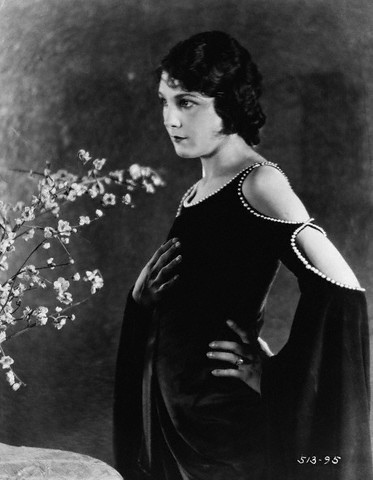
In the entertainment industry, it's all about who you know. Grace Kelly (right) was very fortunate that, in addition to her own strength and determination, she had an "in" in the theater world through her playwright uncle: George Kelly. After studying drama and appearing in her 31-second film debut in Fourteen Hours, Grace was ready to start treading the boards for real, and after a few roles in various plays, she was looking for a part to showcase her range. Luckily, a plum role fell right in her lap via producer Grant Gaither in New York. Gaither had worked with George Kelly in the past on his hit play "Craig's Wife," so when discussion began about casting a beautiful ingenue to play the role of a society girl who becomes a nightclub singer in Gaither's latest production "Alexander," Grace's name came up. She was quickly cast and went to work at the Albany Playhouse. Sadly, the play premiered to modest reviews and didn't run long. One bonus that came out of the play, aside from the experience, was the chance to spend time with a famous co-star: Leatrice Joy, the silent film siren. The two got along well, and Leatrice certainly saw in the young actress a bit of herself. In a way, she certainly felt that she was passing the torch to Grace, whose fame would later far surpass her own former but equally impressive glory.


Leatrice Joy defined what a star beauty was before 
Grace Kelly cornered the market.


Every good parent understands the importance of introducing art to their children. This is why, despite the unbalanced nature of Norma Jeane Mortenson's mentally ill mother Gladys, one can give her kudos for trying to bring music into her little girl's life. After losing her two older children when they were taken from her by her husband, Jasper Baker, Gladys projected a lot of animosity against her "illegitemate" daughter, whom she blamed for her wreck of a life. But, at times, Gladys had moments of clarity and displayed her love for the only person who truly loved her, and she worked diligently at several jobs to be able to afford a nice home for the two of them. Having lived in a topsy turvy world where she spent a lot of time with random relatives and babysitters, Norma Jeane was excited to finally be living with her mother, who continued to run hot and cold. In one of her warmer moments, Gladys bought a white baby grand piano for Norma Jeane and paid for her to receive lessons. The little girl was not a natural, but it gave her and her mother great pleasure to know that she was tickling the ivories of an instrument that had once belonged the movie star Fredric March. Eventually, Gladys went broke, lost the house and the piano, and Norma Jeane was farmed out once more. When she grew older, Marilyn Monroe hunted for the piano, which represented to her one of the happiest and most innocent periods of her life. In time, she found it (see left). Billy Wilder too privileged from Marilyn's limited knowledge of the instrument: the scene in The Seven Year Itch, in which Marilyn plays chopsticks, was the only one she completed in one take. Today, the piano belongs to Marilyn fan and songstress Mariah Carey, who has stipulated that upon her death it be placed in a museum.


Little did Fredric March know, his musical appreciation 
effected more people than himself.


The premiere of Cecil B. DeMille's infamous religious masterpiece The King of Kings was-- in keeping with all things Cecil-- stupendous. Debuting at the newly built Grauman's Chinese Theatre (as it would have appeared at the premiere, right), the pre-show was as jaw-dropping as the film itself. An intricate series of prologues were staged, depicting infamous scenes from the Bible. In total, 100 performers were cast to put the production together, and each scene depicted a different tableau from the scriptures, chronologically leading up to the tale of The King of Kings. All of the famous glitterati were there, including Mary Pickford, who pressed the button to open the curtains. So incredible was the production, that the actual film didn't begin until well after 11pm. One avid film-goer would remember the experience vividly, even after he later rose in the ranks of filmdom himself. Watching then as a young, 12-year-old boy, Gregory Peck, a pharmacist's son, was enraptured by the ornate splendor. He would recall the costumed, Mandarin ushers, the scent of the incense, and the plush carpeting leading to the screen. He could easily see why the fanfare cost $5,000,000 all said. Such an experience only inflamed the secret desire in him to be in the film business. His original plan to become a doctor would be brushed aside in the hope that one day he too would enjoy being a part of such a rich, heart-wrenching piece of artistry. Wonder if he ever thanked Cecil for the sign from God?


Gregory Peck would ditch the medical books for the stage.


Growing up in Jamestown, it was apparent to several local people that Lucille Ball (left) was destined to be an entertainer. It was especially clear to her mother, who encouraged Lucy to enroll at the prestigious Robert Minton-John Murray Anderson School of Drama. Of course, this was also probably done to keep the young girl out of trouble and keep her focused on her future-- after all, she was hanging around with thugs. It took a lot of hard work, and scrimping and saving for Lucy to afford a spot at the notable academy, which was also the only one of its kind. Previous generations hadn't been "taught" how to act; they had simply taught themselves when traveling the vaudeville circuits. Lucy's experience was limited, but it was her same natural, self-taught ability and her limited vaudeville experience that landed her a spot in the exclusive school. Earning her spot, she was on a high when classes began in Manhattan, but her confidence quickly dwindled. The competition was fierce, and Lucy came off as an unstudied, uncoordinated ham. The teachers' criticisms were harsh and very damaging to her self esteem. Her former assurance in her abilities disappeared, particularly because all the attention at the school was going to another talented ingenue, who had both students and faculty alike astounded by her passion and abilities. With all eyes on Bette Davis, Lucy had little chance of success. When cuts were made after the first term, all but 12 of the original 70 students were sent home. Bette made it; Lucy did not. While Bette would consider her courses there a mere stepping stone on her way to fame and notoriety, Lucy would consider the whole thing a serious hurdle between her and the prosperous life she finally found after decades of struggle. She would later state, "All I learned in drama school was how to be frightened." Luckily, she later taught us all how to laugh.


The eyes have it: even as a young woman, Bette's 
determination was obvious.

BITS OF COINCIDENCE: Part VII


The front lobby of The Hollywood Museum. 


After living in Los Angeles for six and a half years, I finally made it to one of the tourist cornerstones of Hollywood and Highland: The Hollywood Museum. You'd think it would be a no-brainer for me to visit this den of cinematic archaeology sooner, but in a way I am glad that I waited. Finding and exploring a new jewel is nice, especially after scouring the whole city and thinking that I'd left no stone unturned. Then again, perhaps the "cheesy" factor delayed my interest. Beings that the museum is located next to a Ripley's Believe It Or Not, I often opted for "not," thinking it was a mere magnet for out-of-towners and that there would be little to engage a true connoisseur's interest (ahem). Well, thank God I finally got bored on a Sunday, because to the museum I did go, and I left more than pleased.


One of the pairs of ruby slippers worn by Judy Garland 
during The Wizard of Oz.


Sandwiched between Ripley's and Mel's Diner, The Hollywood Museum is situated in the old Max Factor building at 1660 N. Highland Blvd. Due to its locale at the old make-up haven, the first floor is almost entirely dedicated to cosmetics and beauty. Different rooms, labeled by hair-color, feature different actresses, and artifacts like Joan Crawford's old make-up case are on display. The "Brownettes Only" room dedicates much of its space to Judy Garland: one of Frances Gumm's original, tiny stage outfits and Dorothy's Ruby slippers are proudly encased for drooling gawkers. The "Brunettes Only" room equally pays particular attention to Elizabeth Taylor, as the "Red Heads Only" does to Lucille Ball.


The dress Marilyn Monroe wore while entertaining the 
troops in Korea (Sorry for the glare).


The museum too, unbeknown to me, possesses one of the most extensive collections of Marilyn Monroe treasures, which are of course shown in the "Blondes Only" room. Her old makeup, famous dresses she wore, and a memorial case dedicated to her untimely death are visible, as is a strange gadget that seems to be an early attempt at the "face-lift." It bears a stronger resemblance to the iron maiden, but for your mug. Needless to say, (or should I say "needles?"), I was scared. Apart from the make-up rooms, the back corridors lead you to a garage where Marilyn's private limousine is parked. I wanted to get a closer look, but was afraid that the monkeys from the Planet of the Apes display would come after me.


The early face-lift: The Max Factor Beauty Calibration Machine, 
still raising eyebrows...


Also on the first floor is an extensive anthology of signatures collected by notorious autograph hound Joe Ackerman. This guy got everybody's John Hancock, and now the majority of them hang on the walls, encased in picture frames according to various movies. The cast of Gilda adorns one wall, Tarzan another, but most happily to me the cast of The Great Dictator was hanging for all to see, complete with the signatures of Paulette Goddard and the Charlie Chaplin. Down another walkway is a room featuring a miniature representation of the barn used as Cecil B. DeMille's first office, used when filming The Squaw Man. This is now known as the Hollywood Heritage Museum, another superb spot. Glamour shots of all of cinema's greatest stars-- Spencer Tracy, Bette Davis, Lon Chaney, etc-- also decorated the walls, along with some beautiful photos of Hollywood's growth from the early, nearly vacant silent years to the bustling times of Schwab's Diner. The temptation to slip one of these portraits under my arm was hard to fend off.


Ackerman autographs from The Great Dictator: Charlie, Paulette, 
Jack Oakie, and Billy Gilbert.


From here I went downstairs to the "Hall of Horrors," which apparently was once a speakeasy, and where now a great many props from classic horror films are on display. I spied the mask of Jason Voorhees, the dresses of Elvira and Vampira, and most impressively the facial casts of some of Horror's greatest stars: Lon Chaney, Jr, Boris Karloff, Bela Lugosi, Peter Lorre, Vincent Price, and Christopher Lee (left). There was more than scary-stuff downstairs, however, and I was pleased with a display showcasing wardrobe from both the 1917 and 1934 versions of Cleopatra. Theda Bara's headdress and Claudette Colbert's gown were both featured. The big finale was the long, dark walk down Hannibal Lane, where a complete re-creation of Lecter's cell stood waiting at the very end. I admit that I got chills when nearing it. As in the film, a folded chair awaited Clarice Starling, and Hopkins's inmate costume and infamous mask within the cell completed the illusion.


Can you smell the fava beans? (Sorry for the darkness).


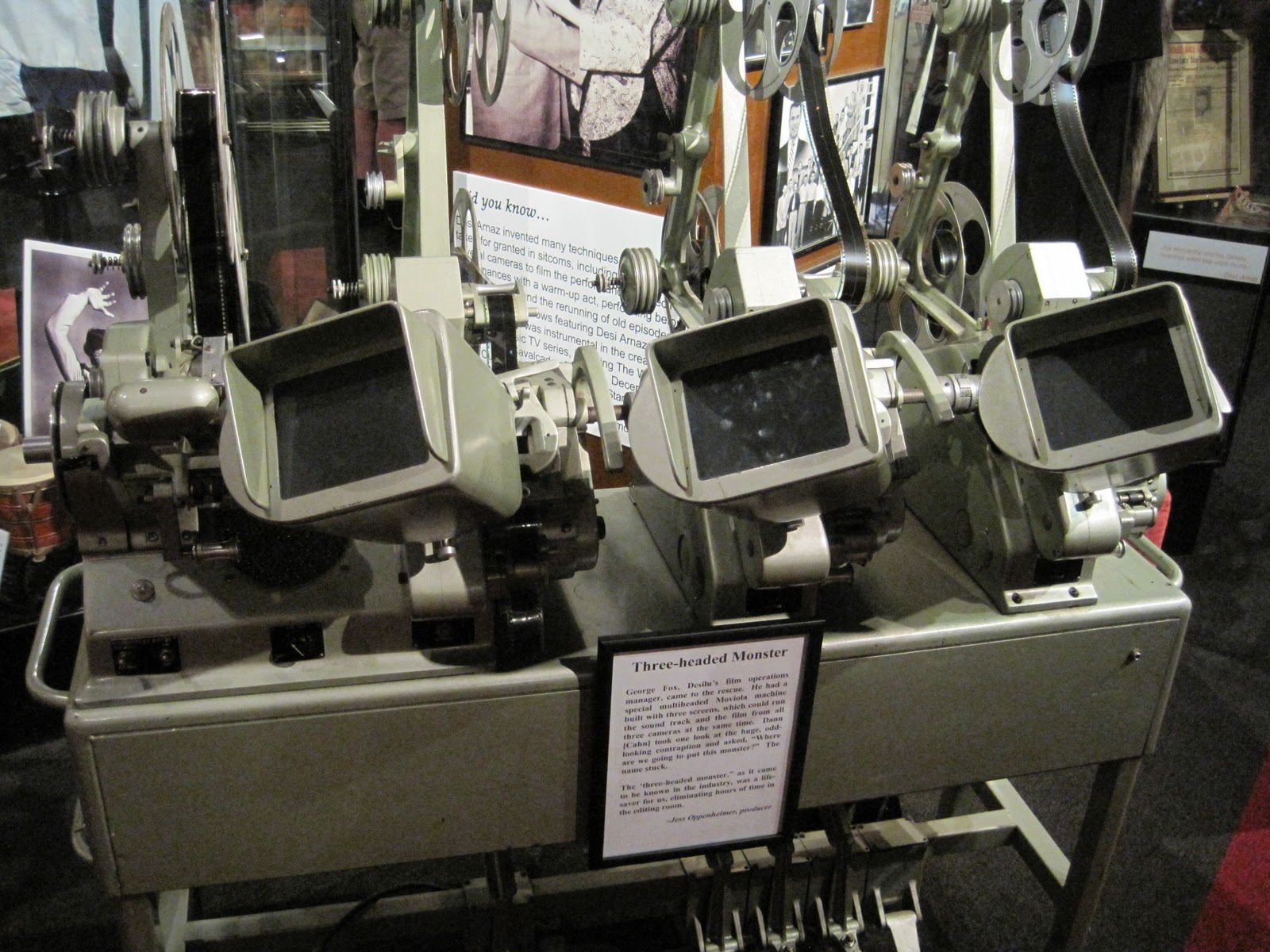
The upper floors are dedicated to rotating displays, which is what makes the museum worthy of multiple visits. When I was there early this September, I lucked out in being able to witness the "Lucille Ball at 100, I Love Lucy at 60" display. In addition to several of the awards that the lovable Lucy won over the years, various props, costumes, and personal dresses she wore to awards shows were present. One of my favorite features was the famous "three-headed monster," which was an innovative piece of equipment used to film what is now considered the first official sitcom. Much attention was equally paid to Desi Arnaz, Vivian Vance, and William Frawley. As a Gustav Klimt fan, I was also appreciative of the "Portrait of Emilie Floge" re-creation with Lucy standing in for Emilie (right).


I Love Lucy's "Three-headed Monster."


And finally, the "piece de resistance" was the top level, devoted to one of my all time favorites, Jean Harlow. Another hundred year tribute, this exhibit proved that the sweet and gorgeous Jean continues to shine so many years after her death.  Much like the Lucy display, there were several dresses to view, as well as enlarged photos of the glamour vixen (in youthful days, left), and personal letters and documents on display. Seeing first-hand the correspondence and penmanship of this silver screen goddess was quite moving, especially when perusing cute notes to friends and colleagues. As big as she became, Jean clearly always remained down to earth and loyal to her pals. Another object worth mentioning was the movie star mural that husband Paul Bern apparently commissioned for their short-lived home together on Benedict Canyon. It depicts a fictional, ancient banquet scene with Jean at center table and other actresses like Joan Crawford and Norma Shearer in attendance. It was quite decadent and unexpected. By far, the most impressive was her personal Packard on display. I don't know much about automobiles, but in this case it was love at first sight. Jean definitely had taste.


Jean's 1932 Phaeton Packard. Yum.


In the back on this same floor, more space was dedicated to other historical mementos, including a roulette table from the infamous Pickfair, gowns worn by Mae West, Greta Garbo, and Clara Bow, and Pee Wee Herman's bicycle. I wish I had had more time to really peruse everything with great scrutiny, but I literally would have had to spend hours there to do so. All in all, it was a great experience with some truly jaw-dropping exhibits and unexpected charms. The downside was that in appearance the museum was a bit cluttered, but I could hardly blame them with all of the artifacts they have to jam into one place. It's still worth a visit to those truly interested in Hollywood history and the preservation of its favorite players. I will definitely be going back when a new display comes to town. 


The much beloved Roddy MacDowell's powder room, complete 
with friends' pictures and autographs.


To visit the The Hollywood Museum: 
1660 N. Highland Avenue
Hollywood, CA 90028
323-464-7776
$15 for Adults
Open 10am-5pm Wed-Sun.

HOT SPOTS in CA: The Hollywood Museum